
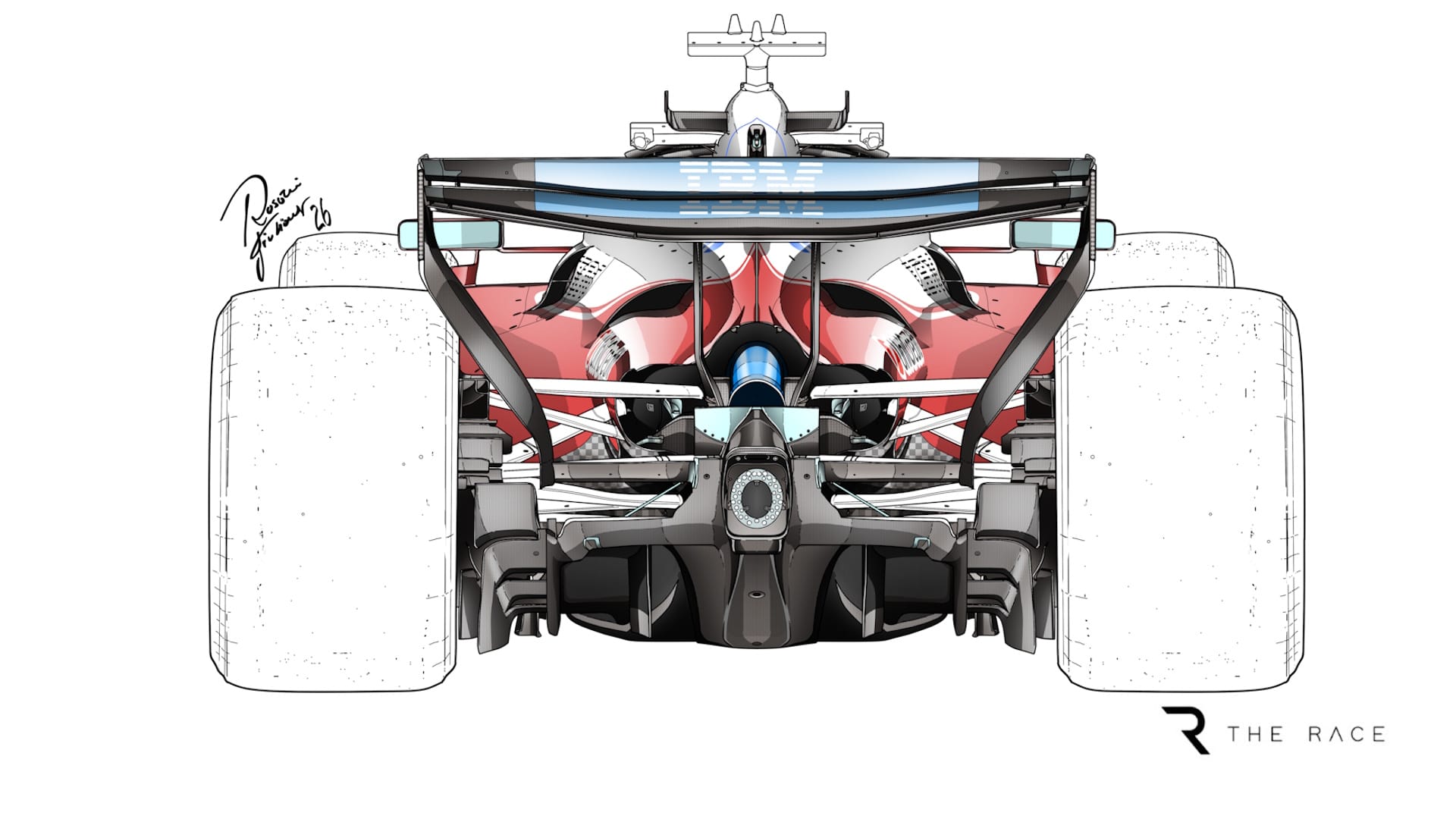
Ferrari triggered the biggest technical intrigue of last week’s Bahrain test as it revealed a double-whammy of innovation on its car.
But while its upside-down rear wing was certainly the most eye-catching idea of the pre-season, it is a concept that some other teams had evaluated and may yet choose to try out themselves in 2026.
What is perhaps more fascinating is that the new exhaust wing, which was snuck out in the second Bahrain test, is not only very clever but it’s something that others are not going to be able to copy quickly.
That is because Ferrari capitalised on some fundamental decisions with the packaging of core car components to work out theoretical limitations that were supposed to stop teams playing around with wings in this area of the car.
Here we look at how Ferrari worked around those restrictions and why it will be so hard for rivals to follow suit.
Upgrade evolution
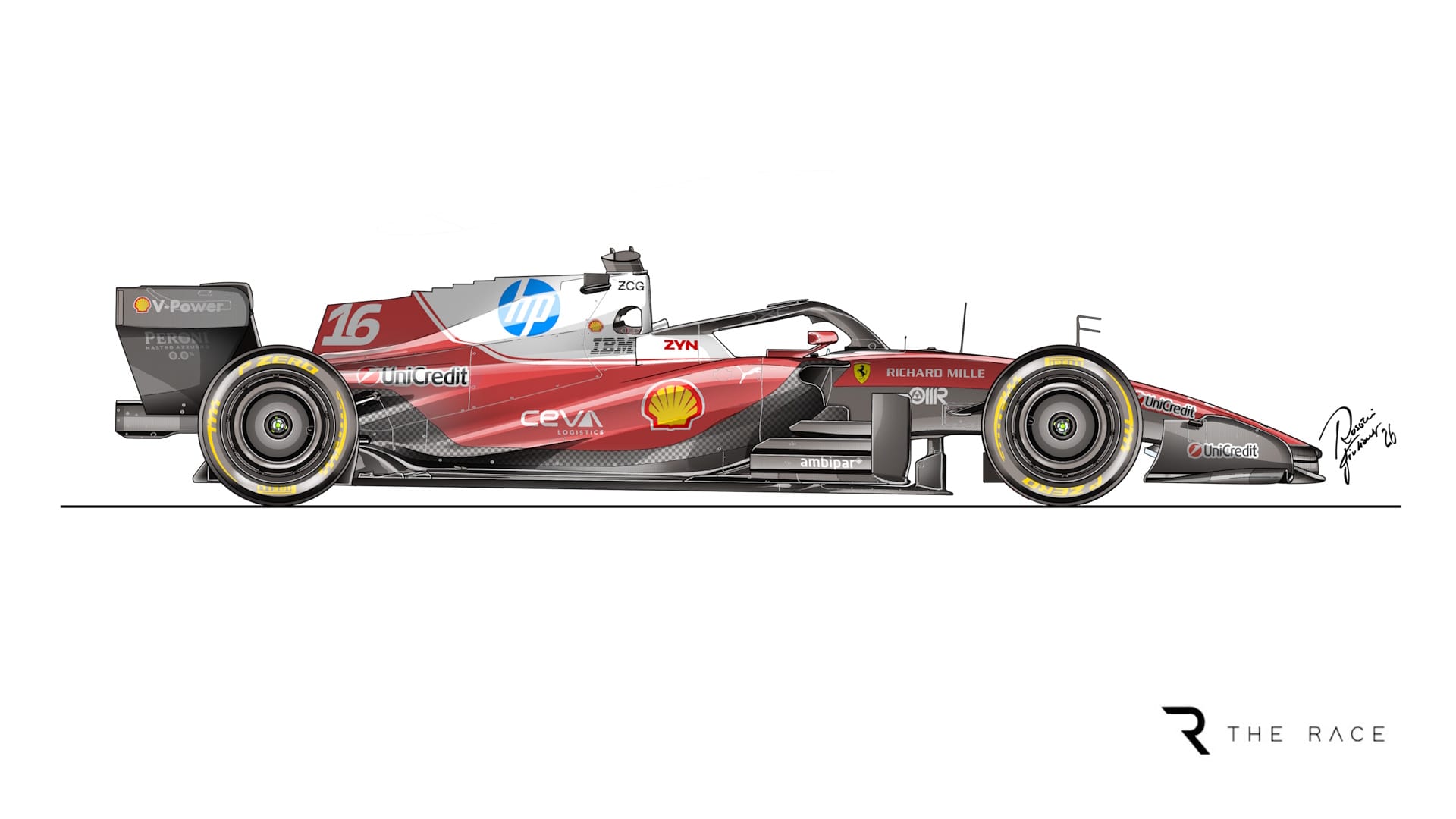
Ferrari’s SF-26 had run in the Barcelona test in a base specification, with the main objective being to shake down the new project on the power unit side and to verify that, from a structural and aerodynamic standpoint, there were no anomalies.
In the initial Bahrain test, the first parts recently developed in the Maranello wind tunnel were introduced.
This included a new floor revised in virtually every area compared to the Spec A version with which Lewis Hamilton and Charles Leclerc had run in Spain.
In the second Bahrain test, the more aggressive solutions made their debut: both the unusual wing placed just behind the exhaust outlet and the new upside down rear wing idea.
Both designs are aimed at extracting gains by operating at the very limit of the regulations.
In terms of the exhaust wing, it is about making use of the exhaust gas exit velocity to try to add some downforce.
The exhaust wing
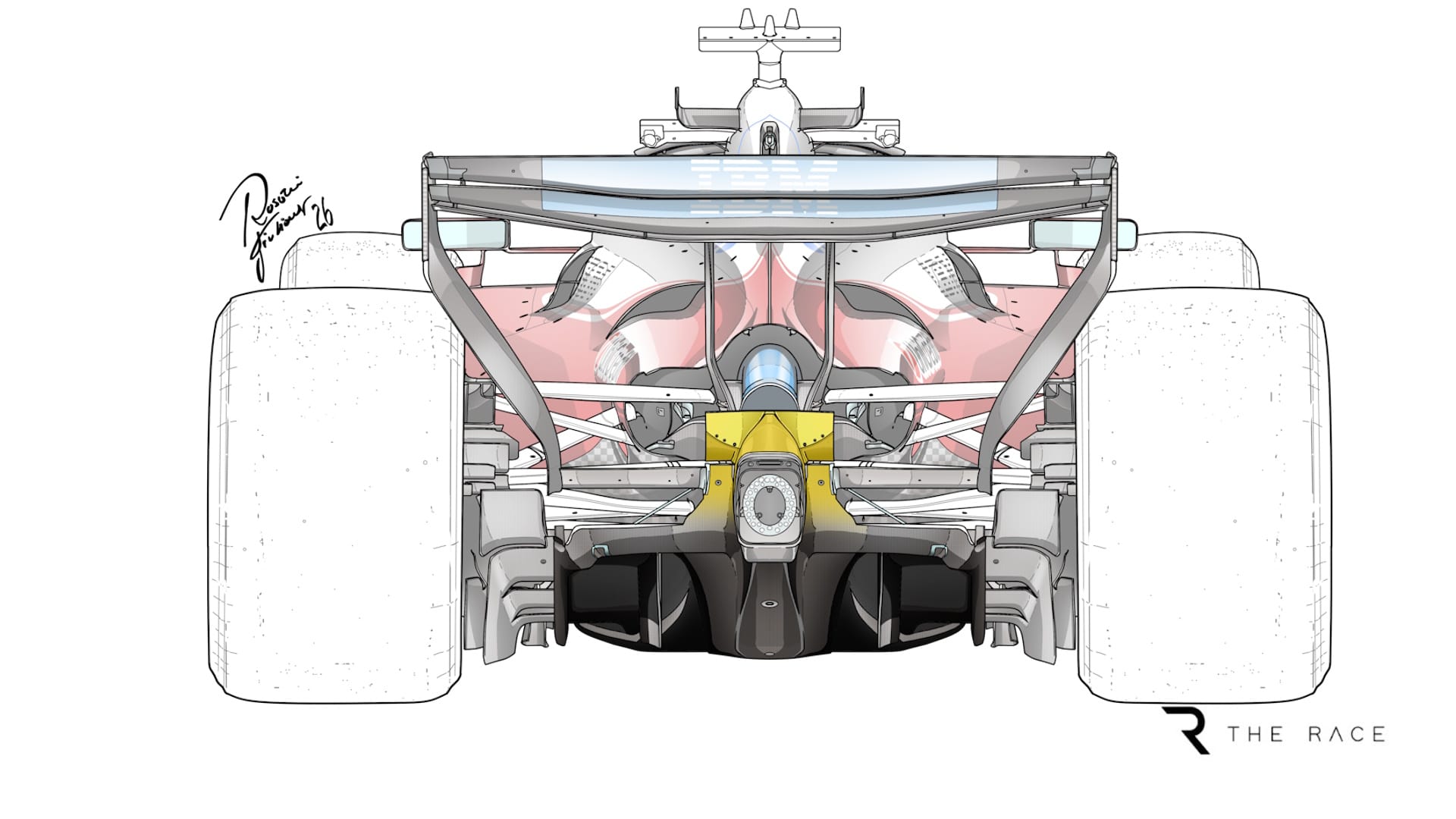
The bodywork wing surrounding the rear crash structure — which, for almost three quarters of its length, positions itself behind the exhaust — required a lengthy approval process in conjunction with the FIA.
The primary advantage lies in cleaning up the airflow exiting the diffuser from the hot (and less dense) turbulent exhaust gases.
The small wing connects with the walls that extend from the diffuser and surround the crash structure (where the rain light is located).
On the SF-26, the engineers coordinated their work by fully exploiting the limits allowed by the rear legality box (RV Tail) in terms of positioning and volume.
Many teams have chosen to use the rear crash structure to create a form of diffuser extension, bringing certain advantages.
Ferrari’s idea was to push the concept to the maximum, exploiting the benefits of a diffuser extension both in terms of increasing its effective length and in cleaning the flow by displacing exhaust turbulence.
The rear crash structure is a component that tapers rearwards, and it is one of the few boxes that does not have a completely fixed position.
In fact, the tail volume’s position along the X-axis (the car’s longitudinal axis) is strictly dependent on the position of other legality boxes.
So where the crash structure starts and ends is directly related to where a team chooses to have its gearbox.
In Ferrari’s case, the aerodynamic department led by Diego Tondi had the insight to incorporate a turning vane with an aerodynamic surface that, to be as large as possible, required the crash structure to begin as far rearward as it could go.
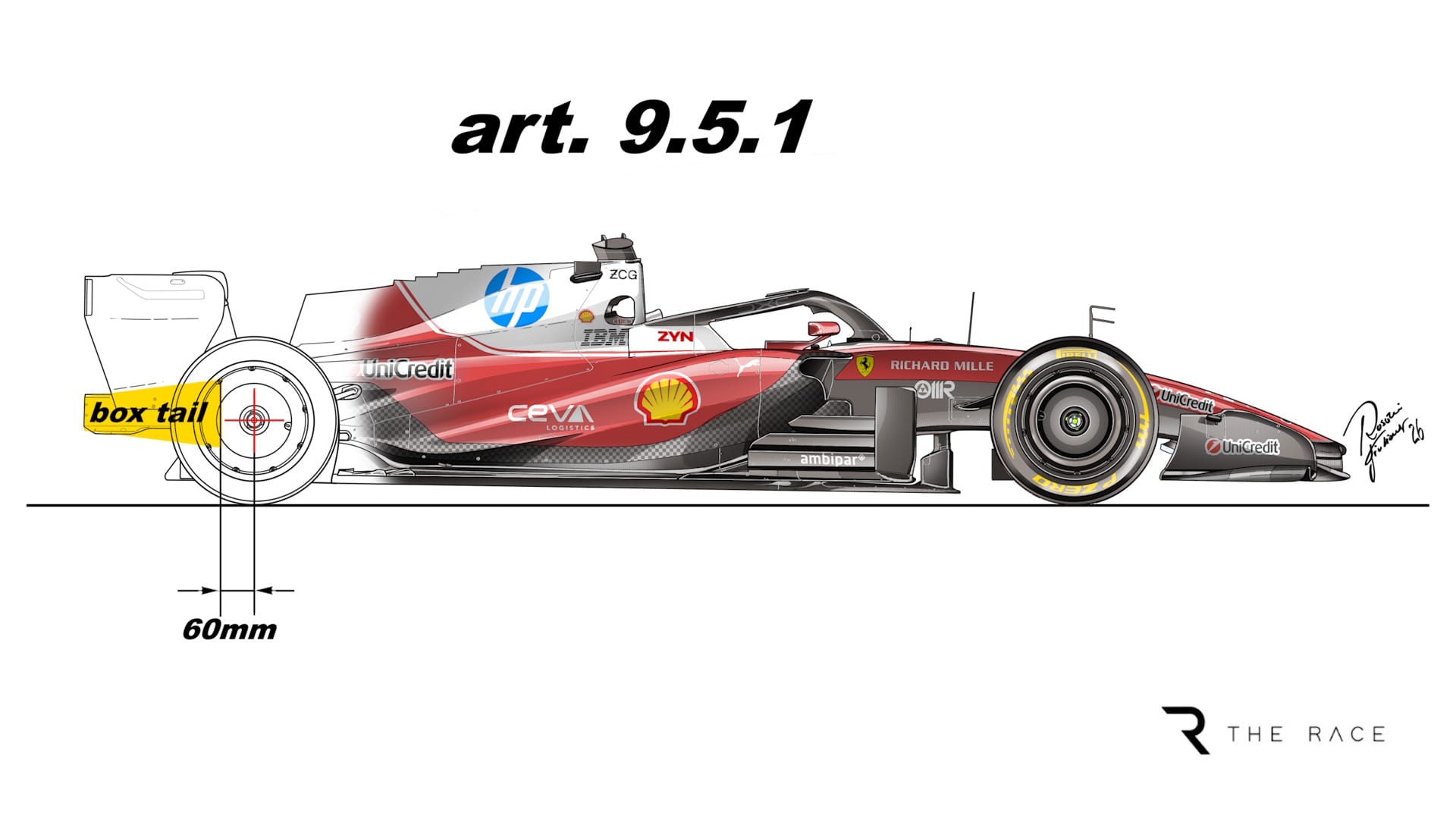
It is understood that the Maranello team worked over the winter exploiting what is permitted by a clause in Article 9.5.1 of F1’s technical regulations, which imposes dimensional constraints on the gearbox.
The key detail affecting the position of the crash structure concerns the (admittedly small) degree of freedom granted by the regulations regarding the differential’s position.
Relative to the wheel axis, it may be positioned up to 60mm forward or 60mm rearward along the X-axis.
In detail, part of Article 9.5.1 states: “The axis of the final drive (at XDIF=0) must be between XR = −60 and XR = 60, between Z = 260 and Z = 280, and be between 390mm and 450mm behind the front lateral gear-tooth faces of both gears of the forward-most forward gear ratio pair.”
In a latest update that was published in December, the tail box was revised in terms of packaging constraints by the FIA.
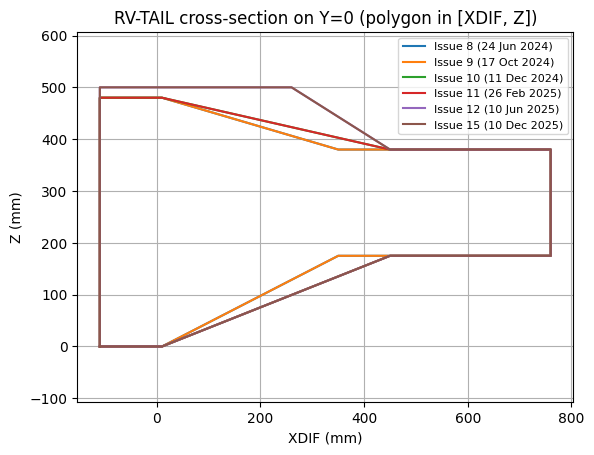
This effectively expanded the allowable volume — particularly in the Z direction (vertical axis).
This aspect proved key for the Tondi-led aerodynamicists in extending the diffuser upward to the maximum allowable height, effectively covering the exhaust.
Simulations carried out both in CFD and in vehicle dynamics were positive, prompting the team to undertake several redesigns that Ferrari made sure were legal in the eyes of the FIA.
To comply, Ferrari had to ensure that the gearbox differential was designed in its most rearward position.
This required a sufficiently narrow gearbox casing in order to avoid excessively increasing packaging in the central section of the diffuser.
This was certainly not a simple task in terms of reliability — and this comes with Ferrari having traditionally been a bit more conservative in this area compared to other squads.
Blown diffuser gains
While the exhaust wing is an interesting solution, it would be wrong to suggest that it will be a game-changer in terms of performance.
It is certainly not going to deliver the kind of massive gain as Brawn got from its double diffuser in 2009, or even what a host of teams got from the blown diffusers from 2011.
But because of the behaviour of the new power units, there is an advantage to be had from exploiting hot exhaust gases that is perhaps greater than it has been in more recent years.
With the new 2026 power units — for which energy recovery strategies involve slightly delaying the lift-off of the internal combustion engine to recharge the battery or staying full throttle when harvesting — Ferrari’s concept could have a noticeable impact.
There should be downforce benefits to be had in many types of corners.
Most other teams will be unable to try the wing out for themselves, as they are constrained by the location of their gearbox.
But it is not impossible that another squad could do it – which is Haas.
Unlike Ferrari’s other customer squad Cadillac, which only takes the power unit from Maranello, Haas also takes Ferrari’s other transferable components so could in theory unleash the same wing idea itself.
from The Race https://ift.tt/9p18jhi


No comments: