
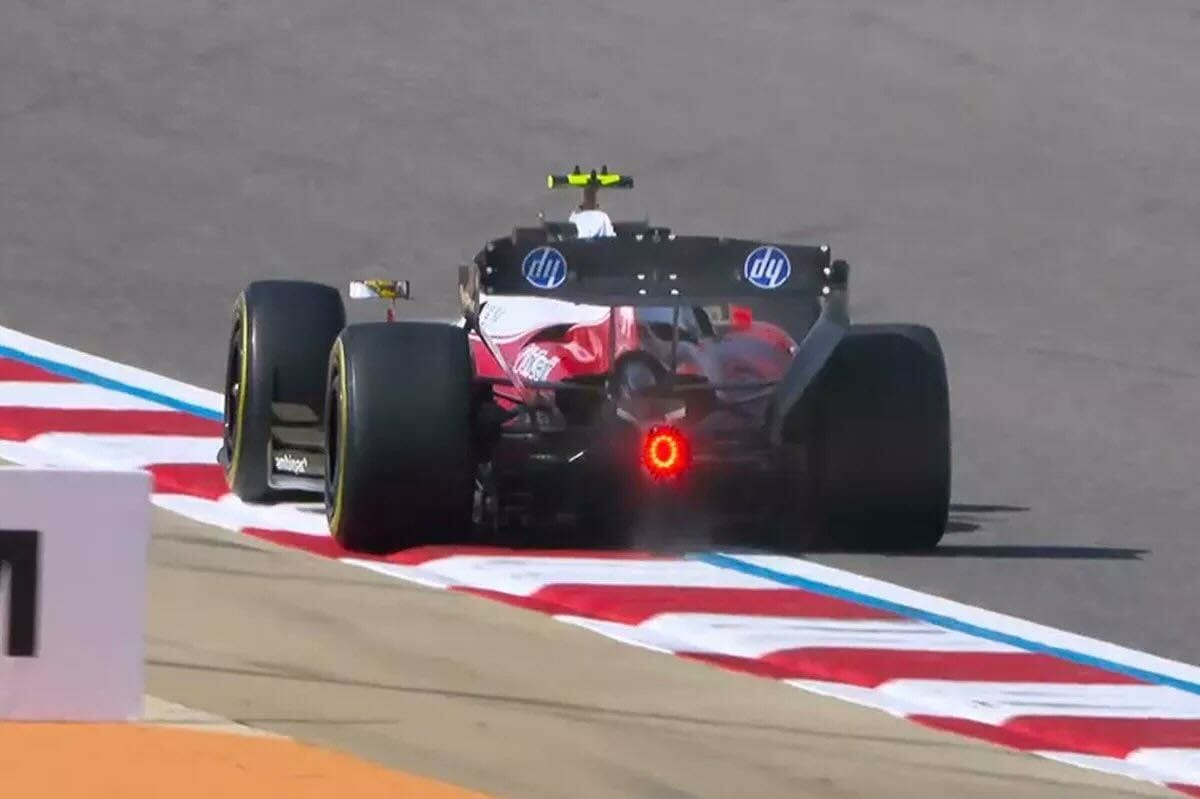
Ferrari literally flipped Formula 1’s active aero concept upside down in Bahrain on Thursday as it revealed a radical new rear wing solution.
Among the test items being evaluated by the Italian squad, Lewis Hamilton appeared on track for some early running with a new rear wing design.
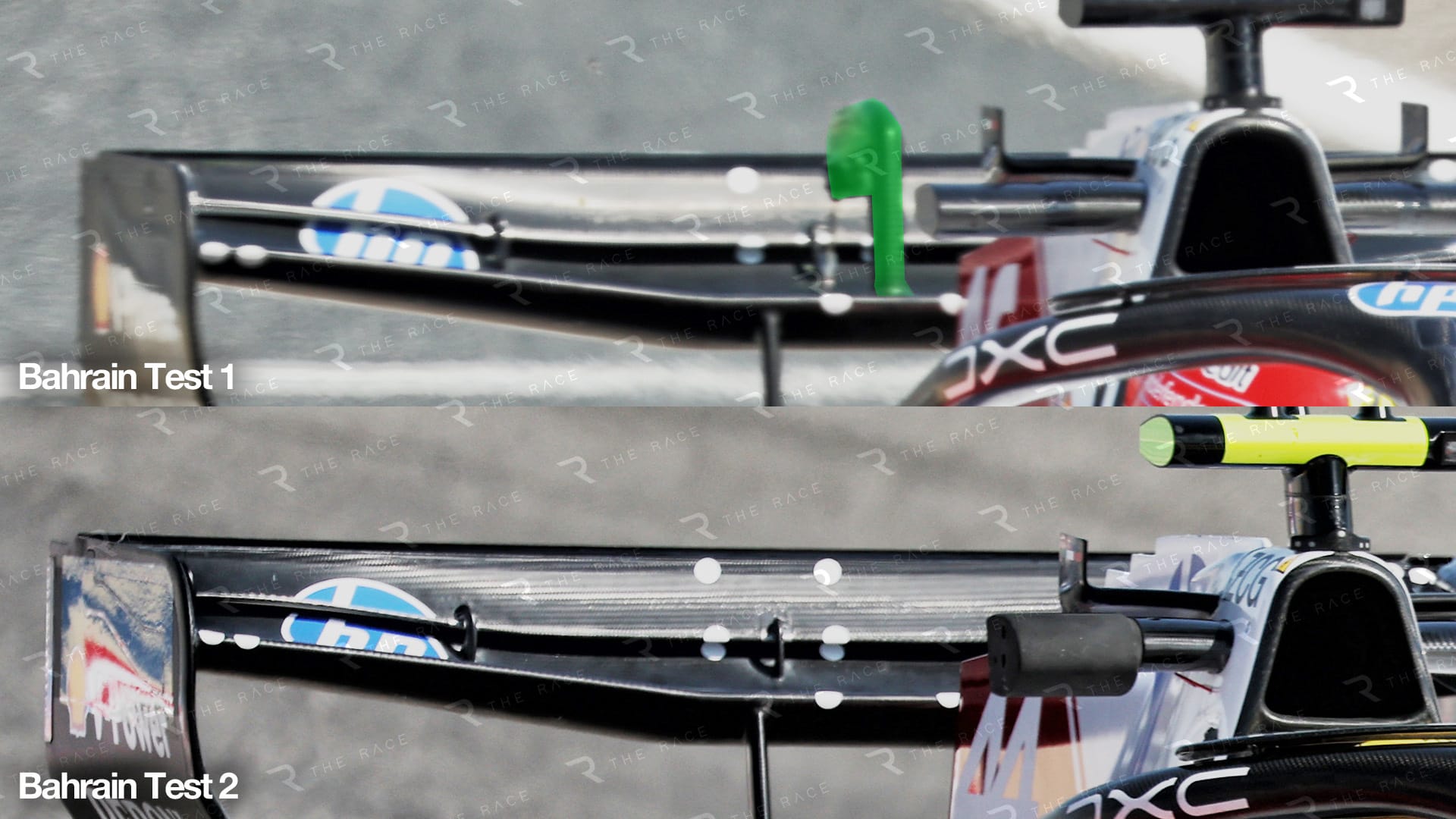
While the wing did not appear radically different when in normal state, except for the absence of the previously-present actuator in the middle, its revolutionary idea became obvious when Hamilton switched to straight mode to reduce drag.
Rather than the upper rear wing element moving like most other teams – in going flat to reduce drag down the straights – it rotated further before ending in a position where it had flipped completely upside down.
In the handful of laps that Hamilton completed, the wing was seen flipping to an upside down position on the straights.
When Hamilton hit the brakes for a corner, the wing flipped forward again to return to a normal position.
The idea behind rotating the wing upside down is simple. This way, it should turn from a state when the upper element produces some downforce and drag to one where drag should be minimised and it may even produce lift.
Reducing drag not also has aero benefits but it could bring gains in terms of reducing rolling resistance for the tyres, too.
Add both of these elements together and the hope is that the rear wing solution delivers a good top speed boost.
The design is allowed in the regulations because there is no limit on how far the rear wing active aero can rotate back when straight mode is activated.
The only stipulation about the differences between corner mode and straight mode is that the “maximum transition time between the two fixed positions does not exceed 400ms.”
Straight mode is clarified simply as a “decrease in incidence” of the rear wing flap, with no maximum angle mentioned – and the change must be identical each time it is used.
It is understood that the Ferrari design is a test item and is being run in Bahrain as part of an evaluation study – so it is something that may or may not be carried into the season.
The push to shed extra drag with the rear wing could be fuelled by a potential compromise that Ferrari has made with an innovative exhaust wing that appeared on its SF-26 on Wednesday.
The extra flap, which extends the diffuser area and appears to help use exhaust gases to blow the rear wing area of the car, serves to increase downforce but could also cost it some drag.
Teams are working hard to reduce drag as much as possible this year because of the need to preserve battery energy and not waste any unnecessary deployment.
from The Race https://ift.tt/lIQmcX7


No comments: