
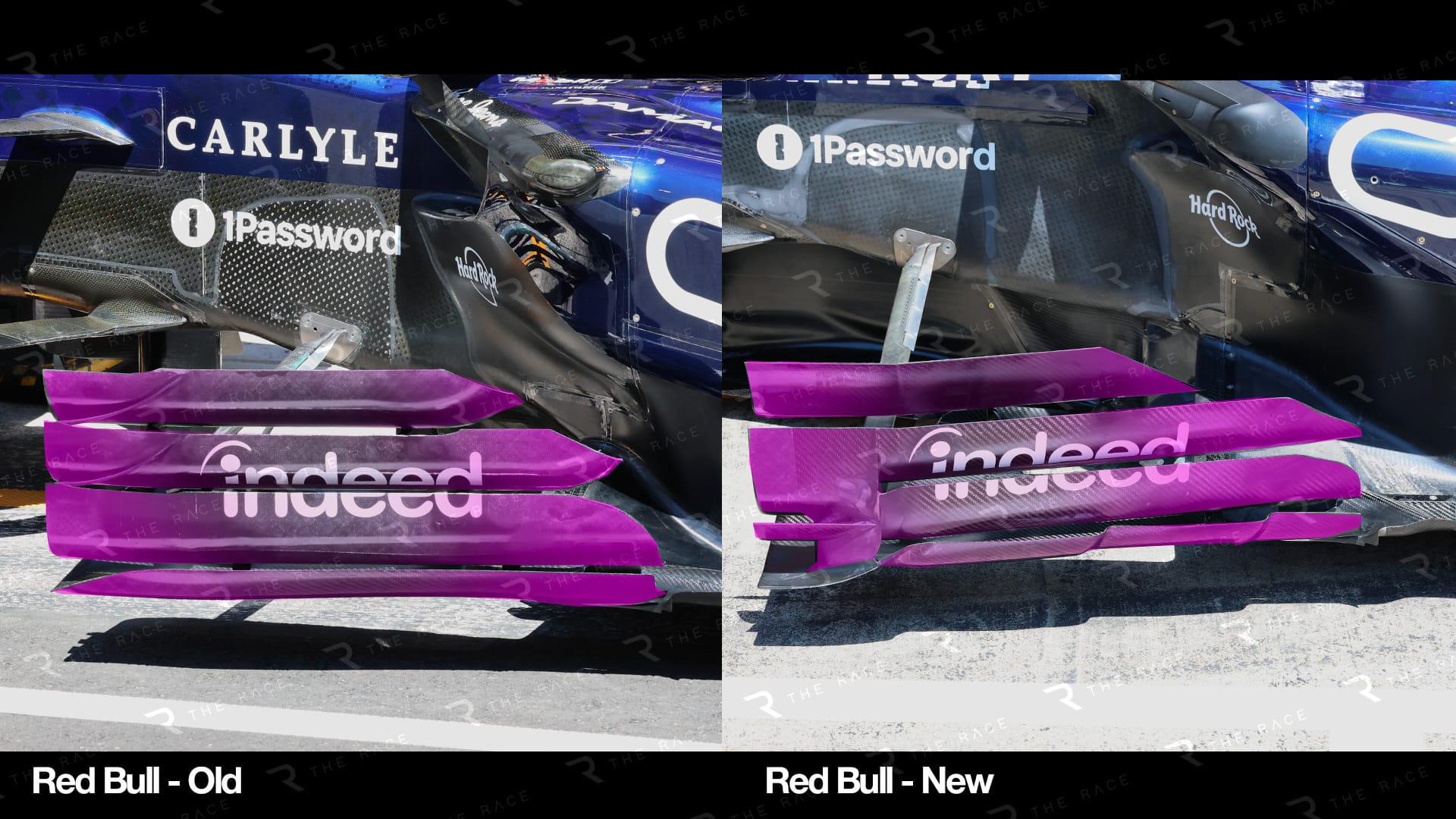
Judging by Max Verstappen’s radio chatter from Austrian Grand Prix Friday practice, I’m not convinced that Red Bull’s latest, and comprehensive, Formula 1 car update has done much to satisfy his needs.
But there are some major changes to the airflow structure of many of the new parts, meaning a change of direction that might require some time to get working correctly.
This has been a season of continual developments up and down the grid, but I’m not sure how the teams are going to stay within the cost cap if this rate continues. But that’s a problem for the accounts department - now a very competitive part of an F1 team - to worry about.
To take a close look at the Red Bull package, we’ll start, as normal, with the furthest-forward components and work rearwards.
The front wing hasn’t changed, following the introduction of a new spec for Barcelona two weeks ago. Once you have altered the airflow structures coming off the front wing, you must then work backwards optimising the aero surfaces to make the best use of that.
So this package really starts with the floor keel. This is the area under the driver’s legs that connects the bib section of the floor to the underside of the chassis.
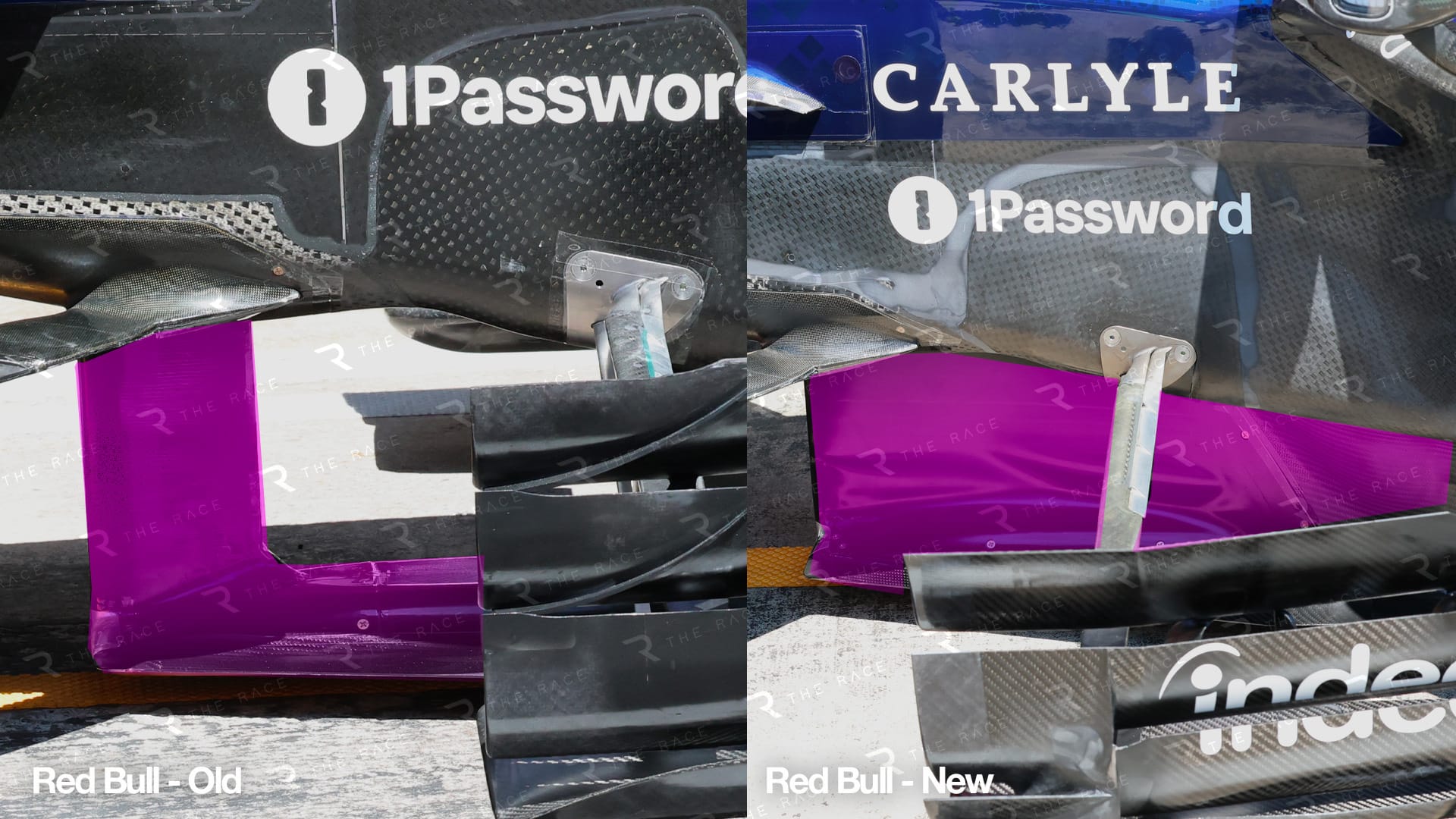
Switching from a short-chord independent support system at the front of that bib section to a full length fairing is a little strange to me. It could be Red Bull is trying to separate each side of the floor’s leading edge to allow each side of the underfloor to work independently.
This could improve the consistency of the underfloor when the car is in yaw, but I would be going the other way and work on the rear of the car to improve the yaw consistency.
The bargeboard area has also changed. This is all about trying to maximise the airflow scavenging effect from under that footplate area.
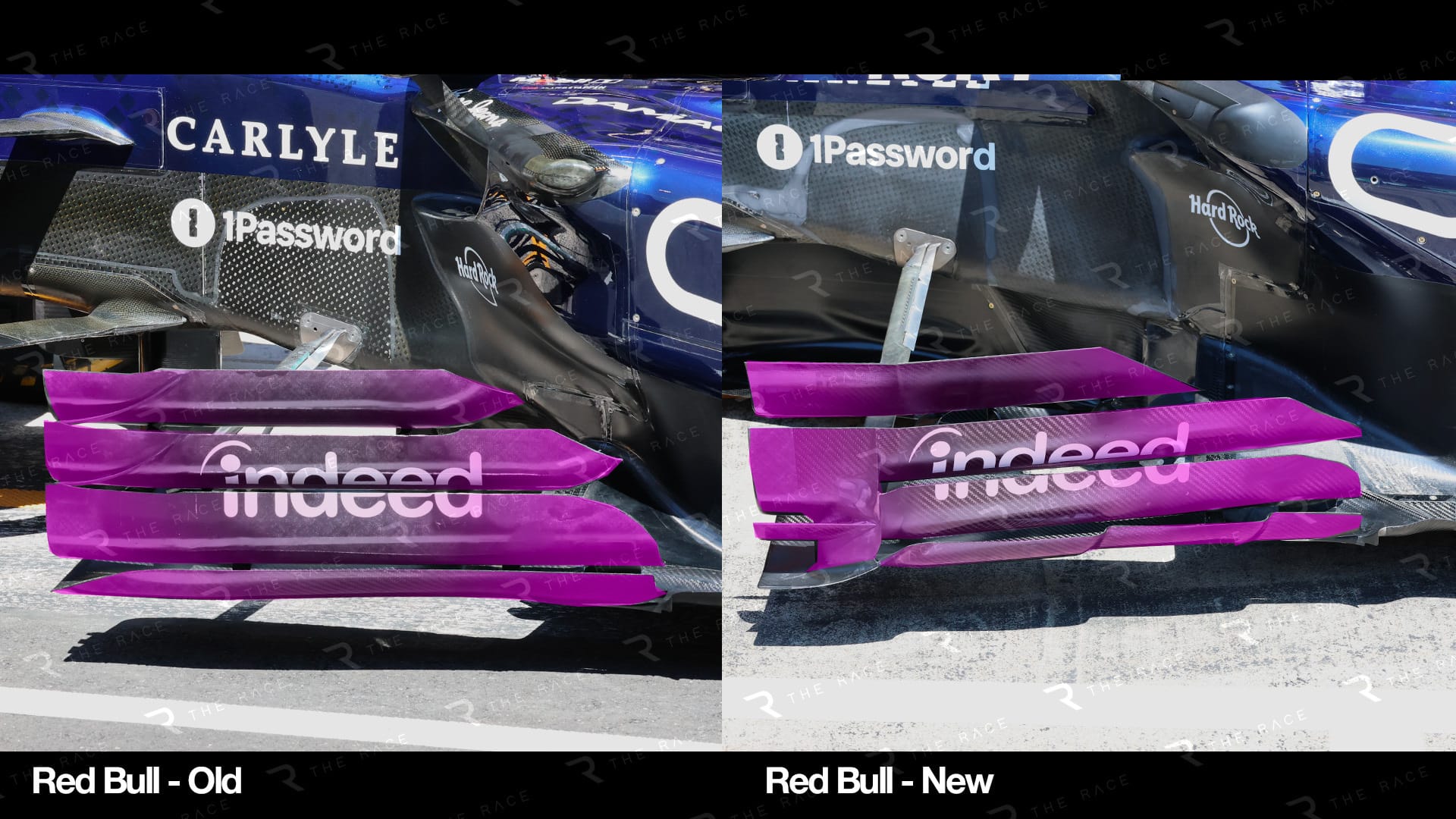
This style of bargeboard does not make the best use of the outwash potential, or the maximum control of the wheel wake turbulence that the more common vertical bargeboards combined with the horizontal components give you. The combination of both these concepts compromises them individually but is more powerful overall, generating improved flow structure going rearwards.
Red Bull’s new sidepods have moved away from having the leading edge undercut area below the radiator inlet connect up to the ‘coke bottle’ area where the bodywork narrows at the rear of the car.
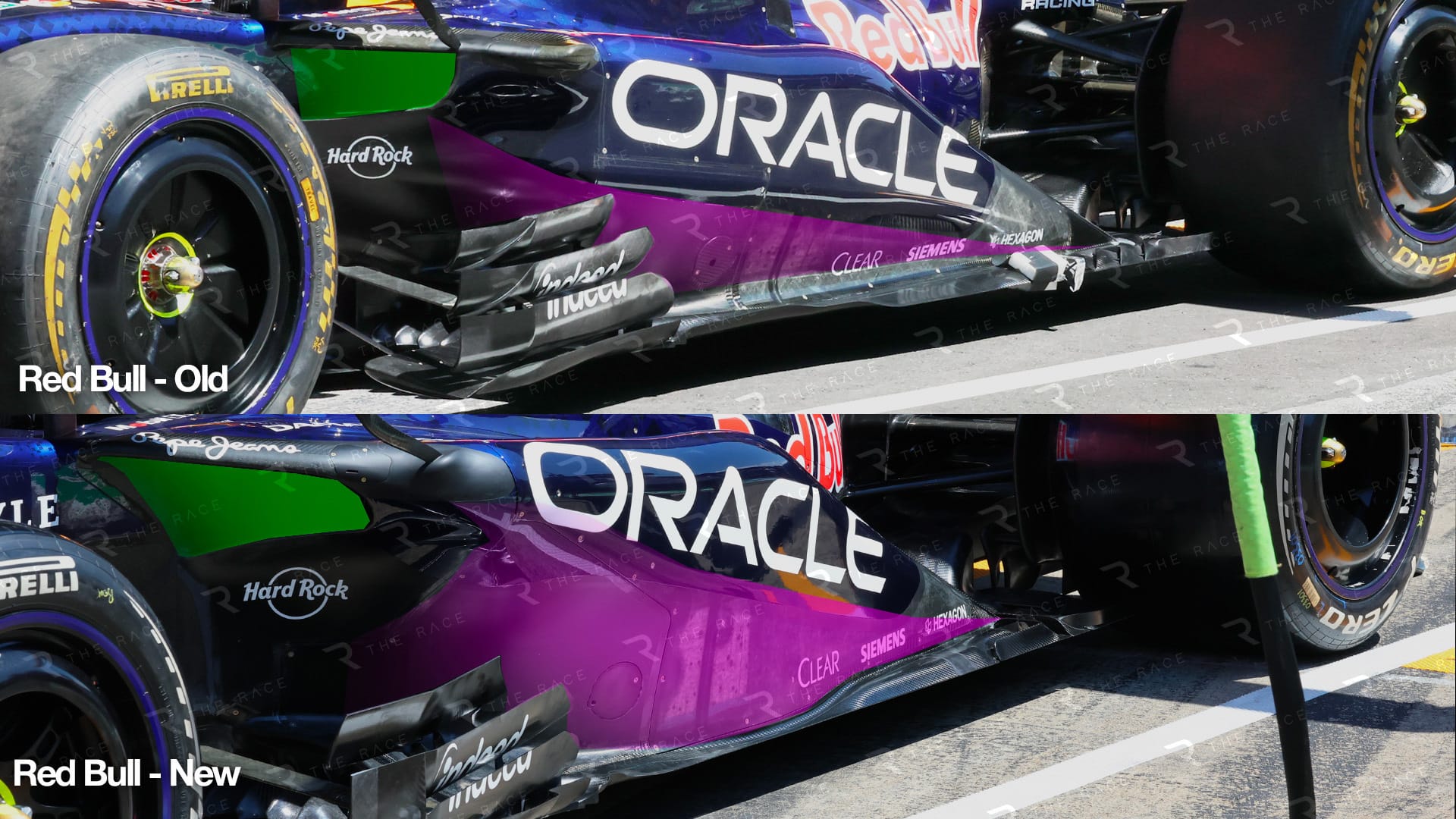
Instead, it is trying to use that wider sidepod working in harmony with the bargeboards to help scavenge more airflow from the front corner of the underfloor. This, in turn, will improve the performance that the diffuser will have on the rest of the airflow that is coming in through the leading edge of the underfloor.
By allowing the diffuser expansion to accelerate the airflow that is coming into the underfloor closer to the centre of the car, the flow will have to travel faster, generating a lower pressure to get from A to B. The risk is that if you overdo it, you can very quickly suffer from airflow separation problems, which leads to inconsistency.
Red Bull also has a very deep gully on the sidepod top surface. This will allow airflow to be pulled over the top of the sidepod down into that coke bottle area.
This airflow that is pulled over the top surface of the underfloor will influence how much airflow is pulled into the underfloor’s undersurface. You want to minimise this, as any excess airflow going under the car will reduce the effect the diffuser has on speeding up the general airflow between the track surface and the underfloor. Basically, that costs you downforce.
Just in front of the rear tyres, Red Bull has altered what it’s trying to achieve significantly. If I was to put my critical hat on, I would say this is more or less a copy of what Ferrari introduced at Barcelona. But there is no way that a team can copy this and manufacture it in the last week, so Red Bull will have been working on it well before we saw it on the Ferrari.
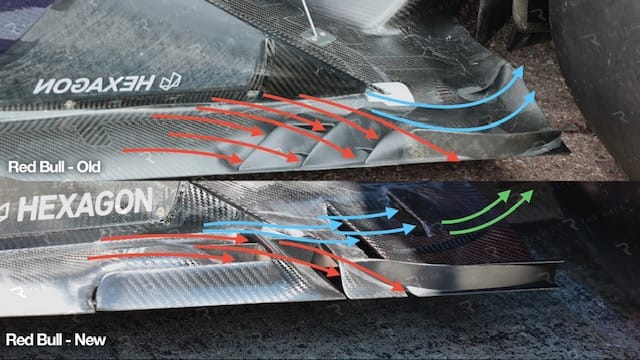
As opposed to trying to connect all of the airflow (red arrows) that is going over the top surface of the floor to the airflow that is displaced when the rear tyre rotates onto the track surface, which is called the outward tyre squirt, Red Bull has separated it.
This allows the airflow that is coming over the top surface of the floor to be influenced by the outboard (red arrows) and inboard (blue arrows) tyre squirt. The green arrows show that connection to the inner tyre squirt.
My first question looking at the back of the car is why, for heaven’s sake, was this stupid exhaust-blown vane not banned from day one? What any car has in this area is nothing to do with the exhaust system. The regulations say that the end of the tailpipe has to be on the car centreline, round, between two defined diameters and set at a maximum angle.
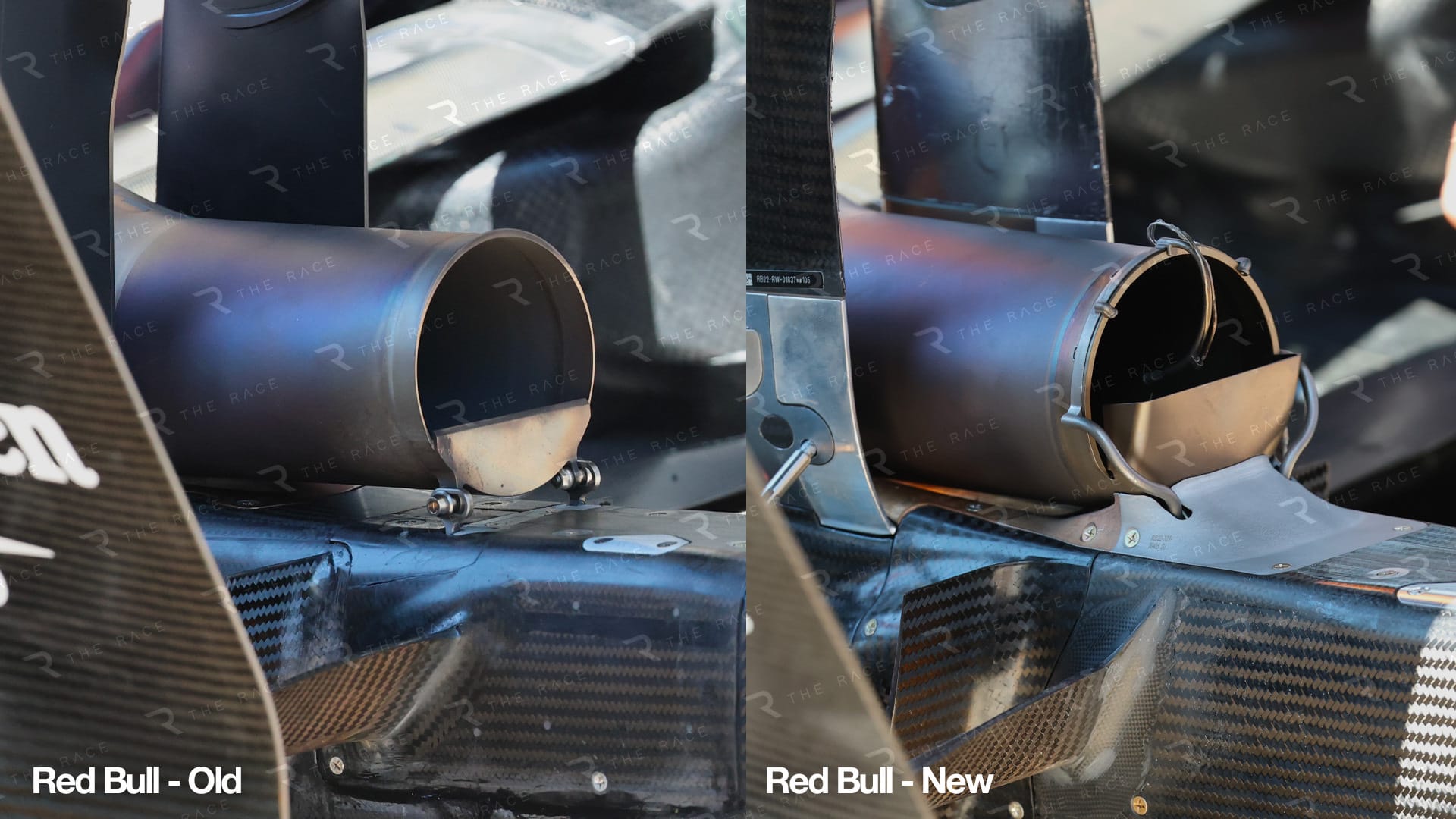
As far as developments are concerned, it doesn’t seem that Red Bull is getting as good a correlation as some of the other frontrunning teams. If this is so then you can very easily be led up the garden path. Qualifying for its home race when everyone has the same objective will reveal all.
To have any hope of keeping Verstappen for the future, correlation is the last thing Red Bull need to be struggling with.
from The Race https://ift.tt/0vI5Wnm


No comments: