
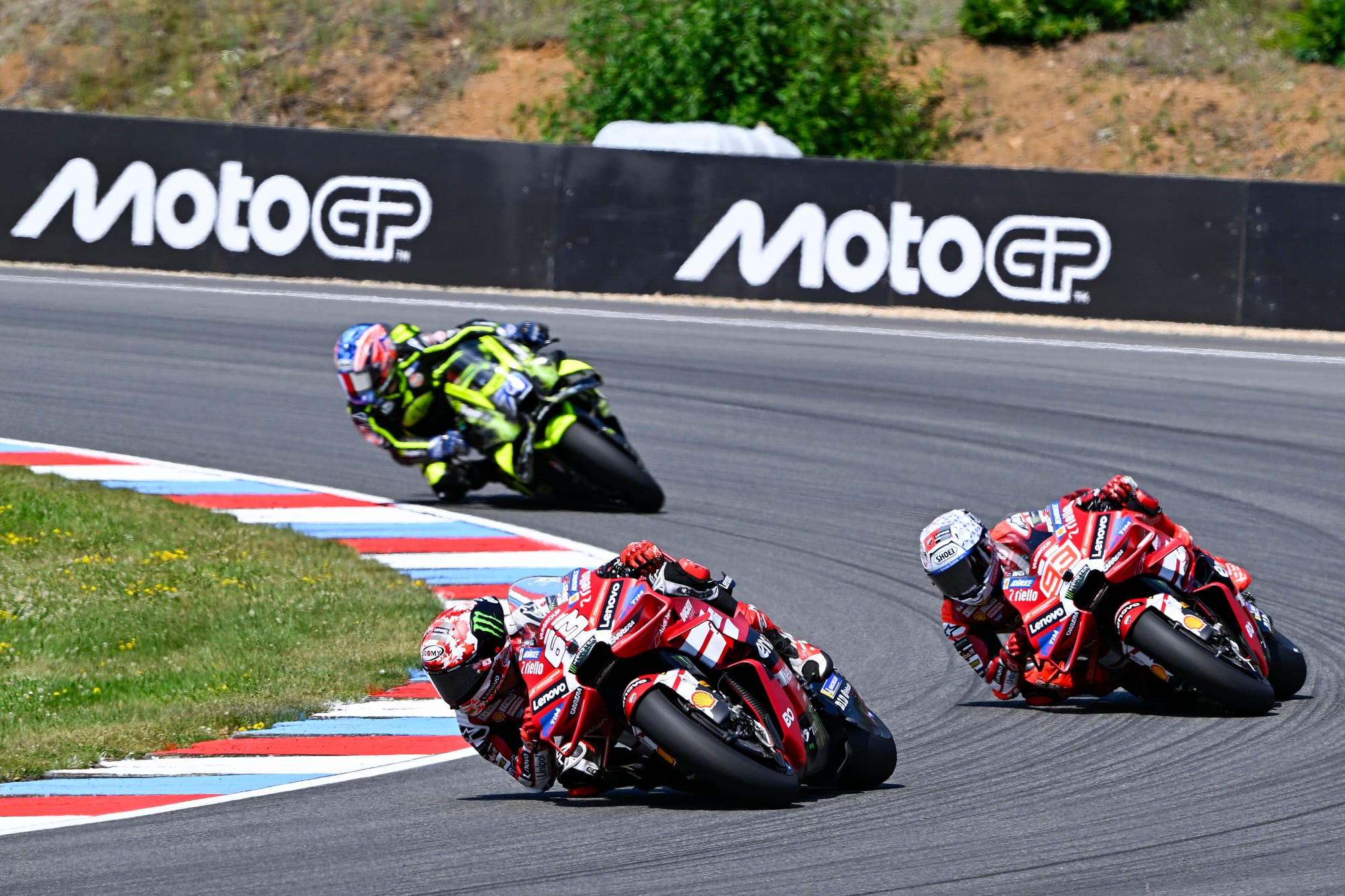
Pecco Bagnaia has exclusively explained to The Race the issues that he believes doomed his 2025 MotoGP season - and how working with brake manufacturer Brembo has given him the tools to turn around that woeful year into a considerably stronger 2026 campaign on factory Ducati machinery.
The news comes on the Dutch TT weekend where he announced that he would be leaving Ducati for 2027 to join its biggest rival Aprilia - and when he hinted in the process that his decision had been made after certain events had transpired within Ducati, centred around his lack of feeling from the front of the bike for most of last season.
By the double world champion's standards, 2025 was particularly tricky. Bagnaia started the season reasonably strongly with a victory at the third round at Austin, but his year really fell apart from the summer break onwards as the issues between Ducati's GP25 machine and Bagnaia's riding style became more and more apparent.
He finished only one of the final seven GPs of the season - albeit with that oen finish coming on a completely inexplicable one-weekend-only turnaround at the Japanese Grand Prix that Bagnaia utterly dominated, with pole position, race and absolute lap records, and wins in both the sprint and main race.
And, for much of the latter stages of the season, things weren't just not going according to plan for Bagnaia but were essentially in total free-fall, as he spent more time battling for the final points-scoring positions than fighting Marc Marquez as his team-mate romped to title success.
Yet, it was something in that dominant Motegi weekend that changed Bagnaia's relationship with his employers at Ducati rather than the lack of points scored in the surrounding rounds, something that he mentioned on Thursday at Assen in speaking about his move to Aprilia for next year.
"It's true that last year wasn't an easy season," Bagnaia explained in the pre-event press conference. "I struggled a lot, and something started to change after Japan.
"There is a place and a time to clear this kind of information," he added when asked to elaborate, "but this is not the time. Not now."
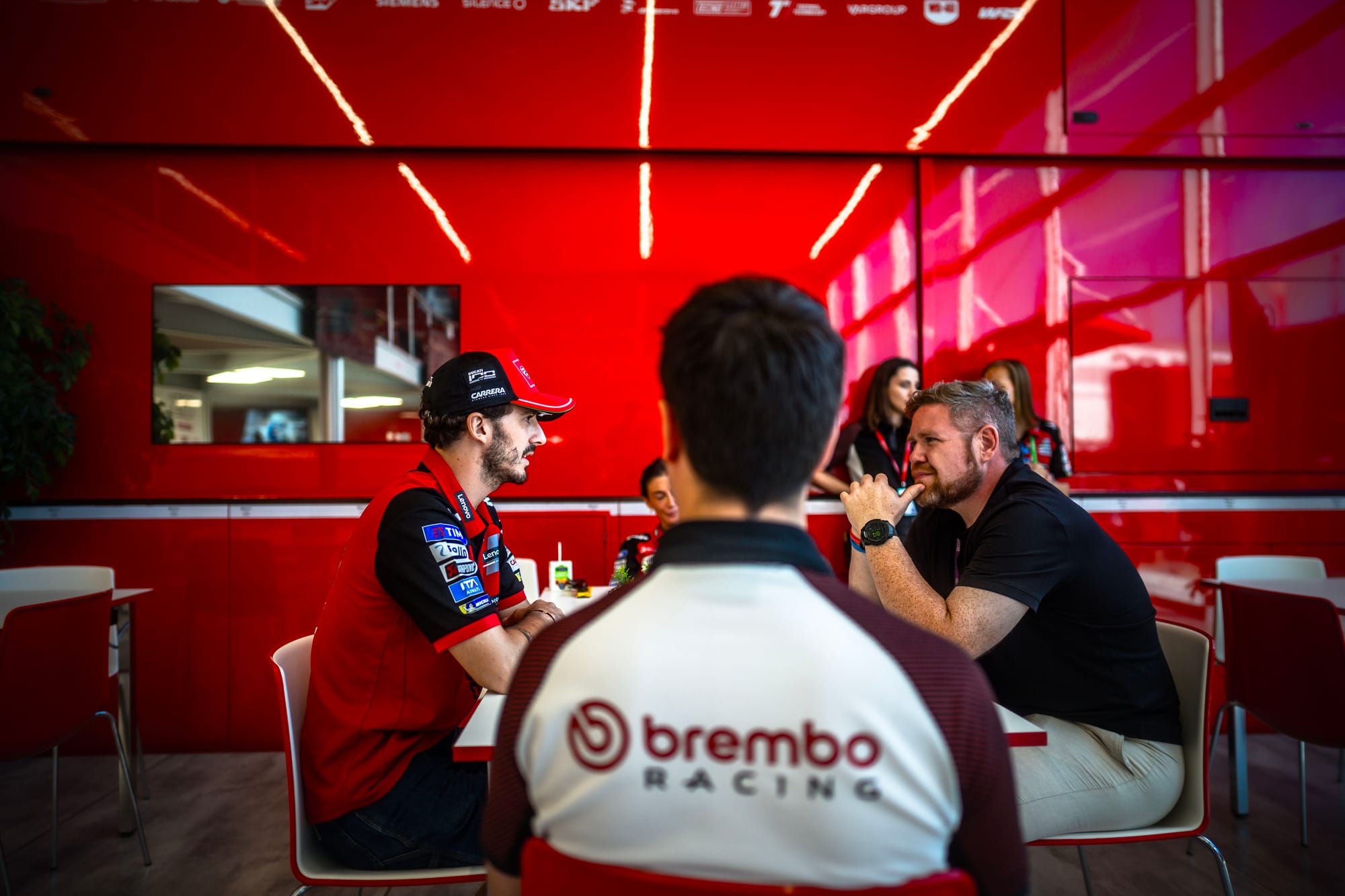
But while he might not have wanted to detail too much about what changed at Motegi, Bagnaia did explain to The Race afterwards what has changed subsequently since last year to help him find his way back into race-winning contention at long last - with significant improvements made to his Desmosecidi not by Ducati but by Brembo.
One thing that makes Motegi different from many other grand prix circuits is the amount of braking power generated on the aggressive layout, something that routinely entails the use of Brembo's bigger 355mm brake discs rather than the regular 340mm size.
Bagnaia hasn't been shy in explaining his considerable preference for them, either, saying that much of the feeling he lost on corner entry - traditionally one of his strengths - on the GP25 came back when he was able to use the bigger discs.
That also tallies not only with his Motegi form but with a number of post-race tests in late 2025 too, where Bagnaia also suggested that he had found a solution to his woes even after particularly tough weekends, most notably at Misano and Aragon - solutions that never quite materialised into race results.
However, with the bigger 355mm discs taking considerably more braking energy to maintain temperature, they've been unusable at the majority of circuits where the forces involved are less severe - or at least, were unusable until 2026 when Brembo engineered a new low-mass disc that works at less extreme stresses and, Bagnaia said, has been the key to turning around his year in 2026.
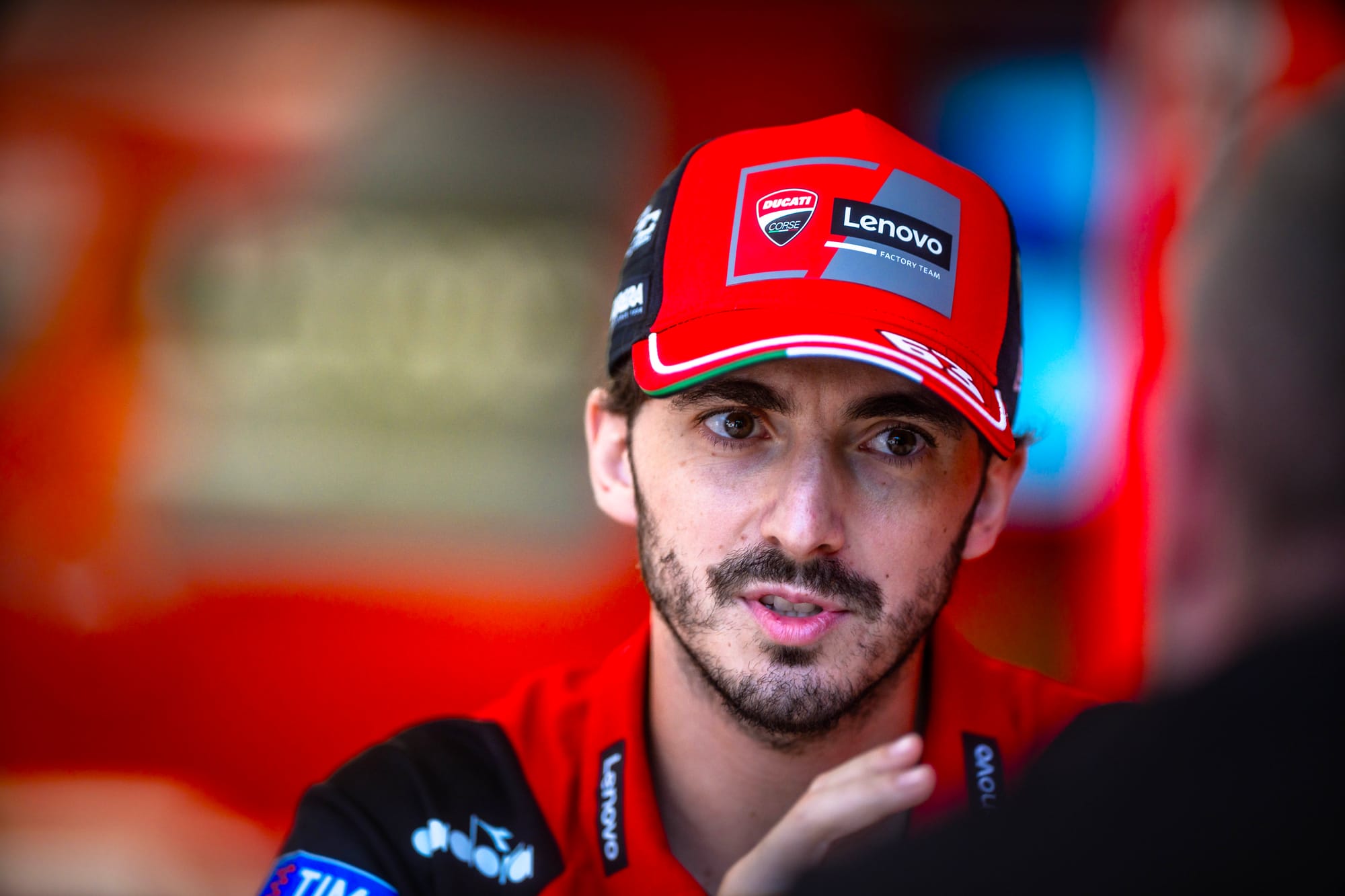
"Yes, a lot," replied Bagnaia, seventh in the riders' standings currently and fresh off the back of his strongest weekend of 2026 at Brno, when asked by The Race if this was what had been missing in 2025. "From last year, yes.
"I'm not the one who puts much temperature on it, but I need friction from the brakes. The 340mm are super strong, super good, but I need something more, and I want to be very precise with my finger.
"Maybe everything changed when I started braking with only one finger, because the 355mm lets me use less force but have more range.
"We tested them last year some times, but all the tracks in the last part I wasn't using them. I started testing, and I decided this year from the test in Jerez [in April] to use them more or less everywhere."
According to Brembo race engineer Stefano Mazzoleni, that's something that became apparent once they started working with Bagnaia to try to address his issues - and found a solution that involved engineering a brand new disc design now available to the whole MotoGP grid (but currently only in use with one other rider).
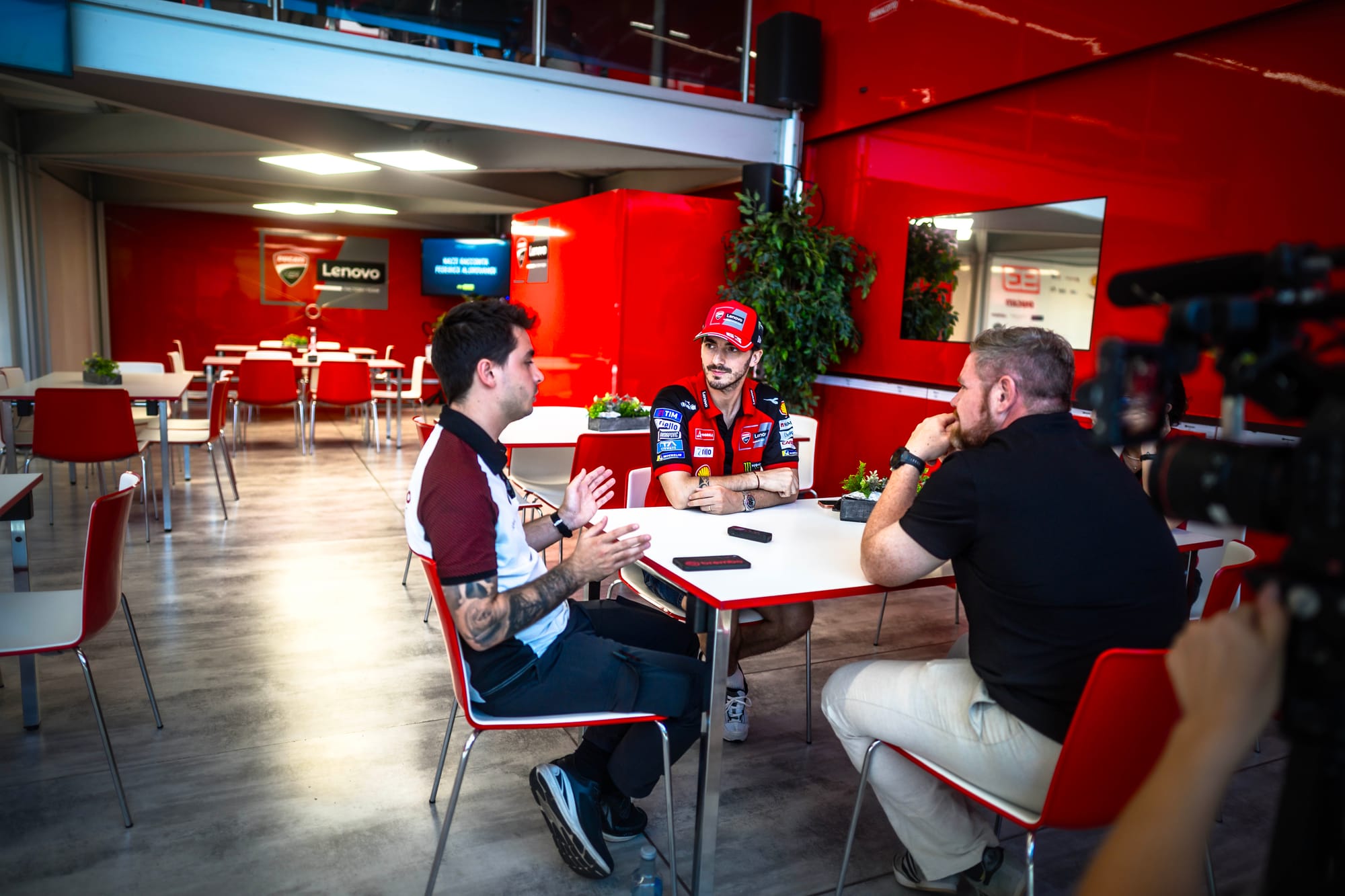
"At first, we needed to understand properly what the issue was and what we could do to help Pecco," Mazzoleni explained.
"But then as soon as we got the feedback we started to make the different shape, because that is the main difference. You apply the same pressure but different torque to the braking surface to stop in a better way.
"We usually use two different diameters for the disc, 340mm and 355mm, and before we only had the bigger 355mm finned discs which is a bigger mass with ventilation that helps the disc to cool down, and it's used in races like Buriram, Spielberg, and so on.
"To use the carbon material, you need to reach the correct thermal range of the carbon material to have the most friction possible.
"And if you use the bigger disc in a low-demanding circuit, it does not work properly because it doesn't heat up properly and you get a bad feeling."
That has finally delivered the solution that Bagnaia appeared to need, which is reflected in his 2026 results to date with a return since Jerez at the end of April to regular podium finishes every weekend - either in the sprint, main race, or both.
But Bagnaia refused to be drawn on the frustrations of 2025 - even while admitting that he isn't entirely sure what went so wrong and why the new discs have been such a miracle cure.
"It's not really that everything has come back again," he explained, "but it's difficult to understand what changed.
"Last year, theoretically the bike was similar but I never had the same feeling. At the times I was able to go with the 355mm high mass, I was able to go a bit better because the bike was stopping, and my problem last year was to stop the bike.
"The first time we understood that it was an improvement was in Aragon [last June]. As soon as I put it, I was able to fight for the top three, and from that moment we started asking to Brembo to help me and they did a fantastic job."
from The Race https://ift.tt/5pqLfuD


No comments: