
Whenever someone with authority makes silly statements out of the blue, it brings to mind the old saying ‘always remember to engage the brain before the mouth’.
That was my reaction to the idea of introducing a ‘customer’ engine in Formula 1, because it’s a good example of something that sounds logical at first thought, but throws up a lot of complicated questions to answer.
I fully agree with the idea of a future V8 Formula 1 engine formula. That, together with a token electrical-recovery system used simply as an overtaking aid, would mean we could get the noise everyone is craving back into F1 and wouldn’t need any assistance from DRS or even active aero.
I also welcome the idea of lighter cars. A 100kg reduction might be a bit ambitious, but I’m sure the design talent within each team would rise to that challenge.
However, having a customer engine alongside what is now basically a manufacturer power unit formula, which F1 has been pursuing for many years, is a major change of direction.
It needs very careful thinking before any rash decisions are made, or even before public statements like the one made by FIA president Mohammed Ben Sulayem.
Fortunately or unfortunately, I have been around long enough to see this all happen before. It didn’t work then and it won’t work now.
Remember when a tender process was launched for spec engines and gearboxes to power all cars for 2010-2012? Probably not, which in itself shows this sort of thing isn't a good idea even though that was all part of a wider political battle.
The world of F1 engine suppliers has never been stable. Ferrari is the only team that has stuck with its own engine and continued through my 53 years in and around the championship. We always used to listen to the Ferrari warming up in the morning because the noise was distinct from all the others.
Way back in 1973, engine-wise, we had the Ferrari 312 boxer, the BRM P142 and the Tecno Series P. The rest of the teams were what we would call privateers, all using the Cosworth-Ford DFV. Other than Ferrari and BRM, they were also all using the customer-available Hewland FG400 gearbox. Most of those Cosworth-Ford DFVs were rebuilt by various engine rebuild companies, many of them involving ex-Cosworth personnel.
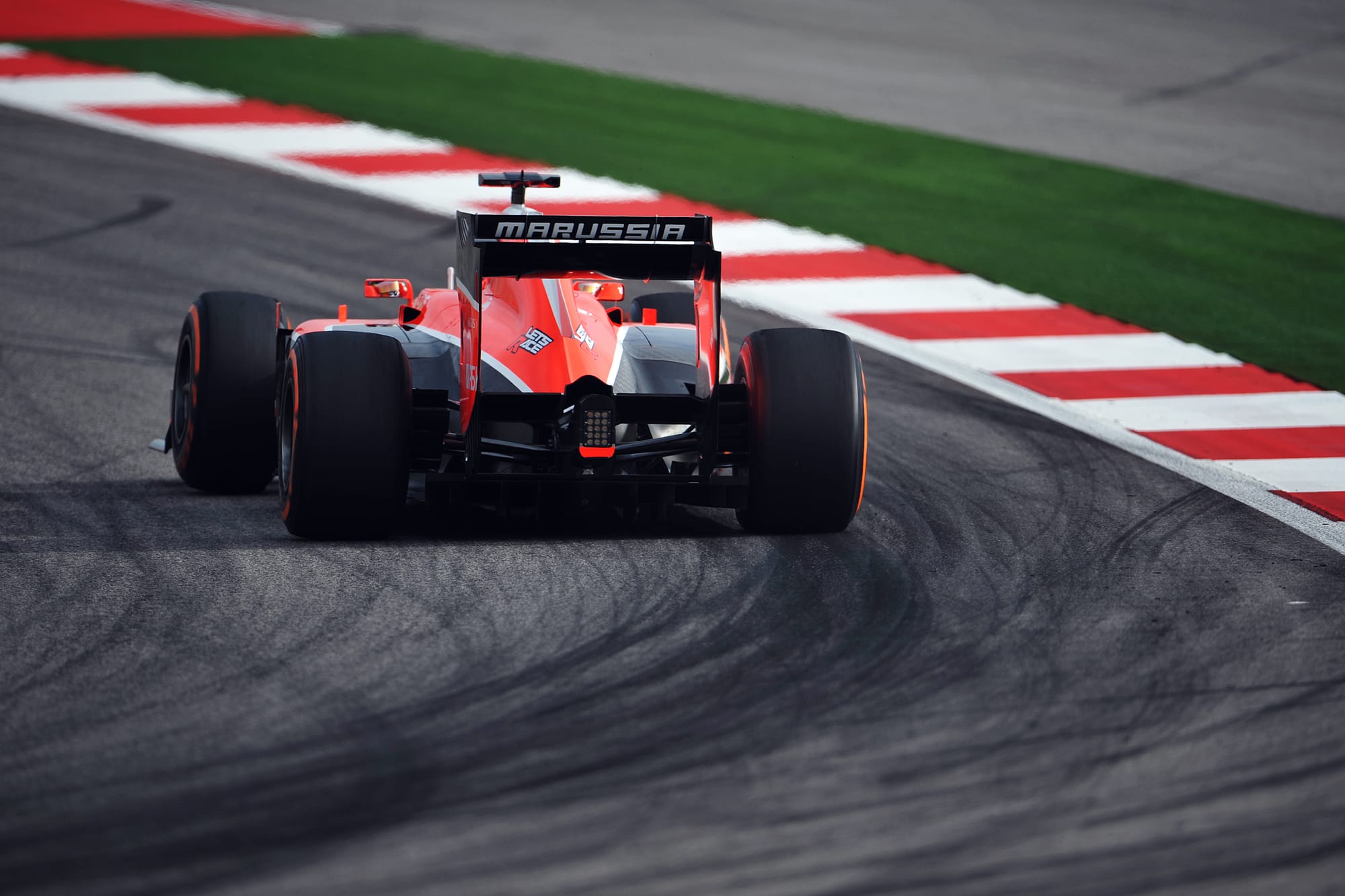
As the years passed, the privateer teams were squeezed out of F1 by the manufacturers amid rising costs. Cosworth was the last of them, last competing in 2013 as supplier to the Marussia team.
F1 is a very different beast now, but we must always remember that manufacturers like Toyota, BMW, Peugeot and Honda, to name but a few, came and went at the drop of a hat through a boardroom decision.
We also need to remember that, in my view, the problems we have now with the power units are 99% generated by the governing body, the FIA. It wrote the regulations that put us in this situation. The other 1% is probably at the request of one or more of the manufacturers.
Many people were against this hybrid concept well before it was introduced in 2014, but it was railroaded through. Even more were against the changes to the power units for 2026, stating publicly that the balance of harvesting and deployment was flawed. But again, all this fell on deaf ears.
You can argue that having this customer engine is a sound idea, given it means there’s always an F1 engine available, so the manufacturer influence is reduced. That’s true, but if the FIA allowed the introduction of one built by an independent company at a reduced price, it would immediately divide the championship into the haves and have-nots.
Remember, some of these discussions are driven by Red Bull owning and running two teams, and by other power unit manufacturers supplying customer teams. Some teams are worried that if they don’t toe the manufacturer’s line, they will get second-best treatment. That’s just paranoia. Get on with what you have, get the best out of it and you will improve your results. Don’t start blaming others for your problems.
However, you can be absolutely certain that there will be pressure from the manufacturers for the customer engine to be inferior. After all, why would they spend all this money if there’s a cheap option that beats them?
This would run counter to the attempts to even up the teams through measures such as the cost cap, the fairer Concorde Agreement payments and aerodynamic testing restrictions that need to stay in place for many more years before we truly have 11 teams with similar potential in F1. So why create a haves-and-have-nots formula?
The V8 formula is a good idea, but the FIA should not dismiss an increased-capacity V6 without a turbo. A 2.4-litre normally aspirated V6 would just about achieve the horsepower and noise levels F1 fans are crying out for. As Ben Sulayem says, the turbo is a bit like a silencer, it muffles the exhaust noise.
I believe the best solution is for the FIA and Liberty Media to sit down with the power unit manufacturers and a couple of high-end independent engine manufacturers to come up with a power unit concept that isn’t as definitive as the current one.
A maximum customer price needs to be set for the season's supply of that unit and if those two high-end independent engine manufacturers want to pursue designing, building, developing and marketing their product, then they should be welcome - if they can drum up customers.
Also each engine manufacturer should be in a position to supply at least two teams and a maximum of three. In the case of a participant that means themselves plus one or two other teams. For that independent engine manufacturer it means two teams.
At the moment we have Mercedes supplying four teams, including itself. Ferrari supplying three teams, including itself. Red Bull supplying two teams, including itself. Honda supplying one team, effectively itself. Audi supplying one team, itself.
If all of those were required to supply a minimum of two teams to a maximum of three, it would mean that at least 10 to 15 teams would be covered with engine supply without going to outside suppliers. That is, other than if they were able to create a rocket ship that everyone wanted.
This should allow a little more scope for concept deviation and give the manufacturers a little more head-scratching in the early stages. Even if the battery pack, harvesting and deployment control system, and MGU-K were standard issue, it wouldn’t take away from the challenge of building the best normally aspirated V6 engine. If any current power unit manufacturers don’t want to play with that newly defined ball, then so be it.
Keep the hybrid system as it is, with harvesting from the rear axle under braking and deceleration, but limit its usage to an overtaking aid. Use it only if you are within one second of the car in front when you cross the start/finish line. Then you can use your, let’s say, 4MJ battery capacity on that lap in one burst or split it up as requested by the driver pressing a button.
Either way, it would mean you have more power for an overtake. Yes, that is artificial, but at least it is the least artificial of all the overtaking scenarios that have been introduced in the past. If you don’t use it on that lap, it gets dumped and you start all over again.
We can all come up with many different suggestions. But as we all know, they fall far too often on deaf ears.
from The Race https://ift.tt/OKifELV


No comments: