
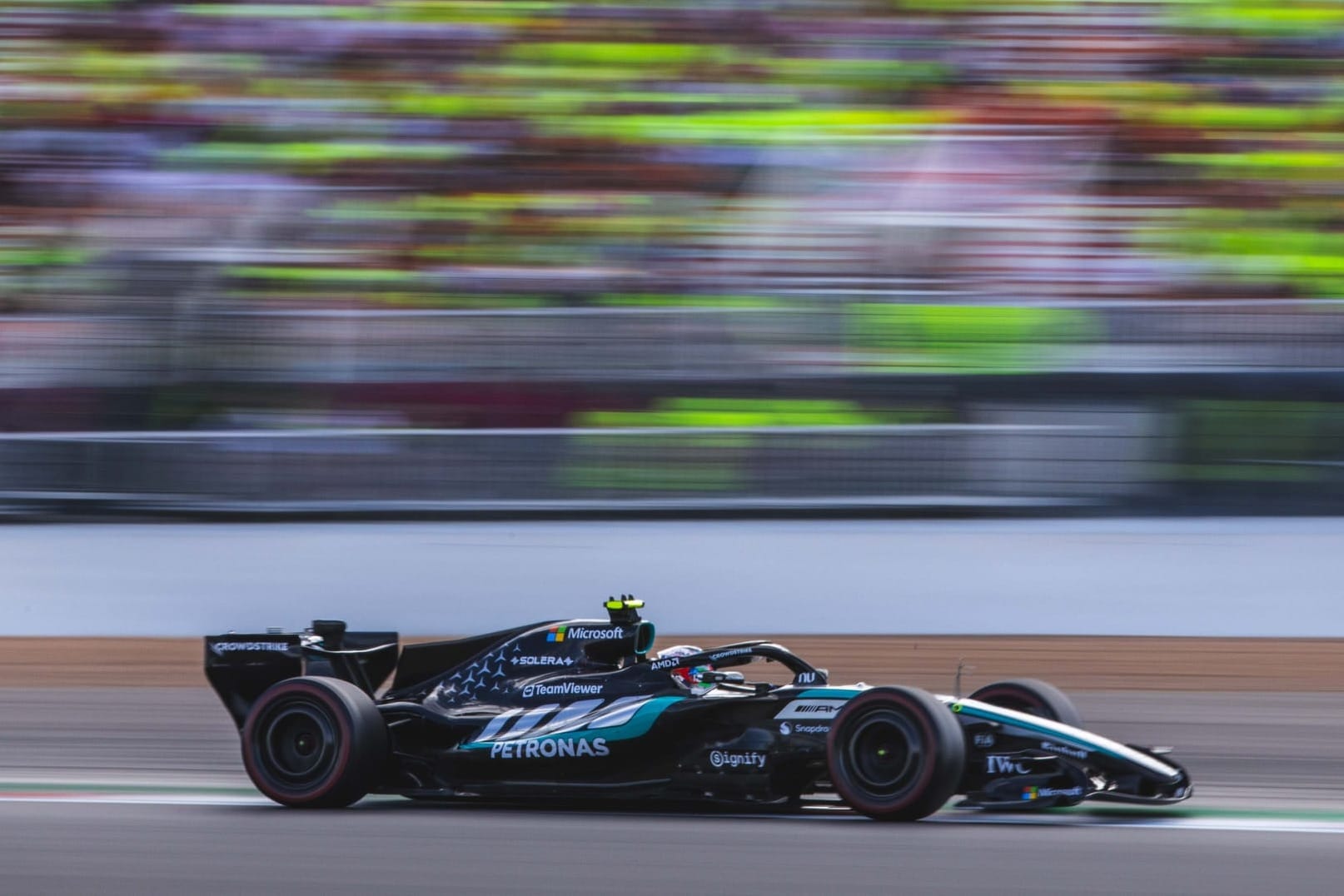
The intriguing qualifying trick that Mercedes resurrected at Formula 1's British Grand Prix caught its rivals by surprise.
The game was only given away when telemetry traces from track action were pored over after sprint qualifying on Friday.
At first glance, the unusual lifts that Kimi Antonelli and George Russell were doing as they approached the timing line at the end of their qualifying laps seemed a very weird thing to do.
Especially when you consider that Antonelli missed out on sprint pole position to Ferrari's Lewis Hamilton by just 0.011 seconds - a gap that would conceivable not have been there if he stayed flat-out.
But it did not take long for the opposition, nor The Race, which first revealed what was happening, to work out exactly why Mercedes was backing off to go faster.
In doing so, both drivers were able to deploy more power earlier on the straight than others.
With clear laptime benefits, and the FIA happy it is legal, other teams are now almost certain to start copying that trick at future events where it could deliver gains.
But, as The Race has learned, it is a complex trick to get right, and there are some high-stake risks in deploying it because if you get it wrong the danger is not losing laptime, it is disqualification.
The trick
The qualifying trick revolves around the super complex energy management rules in F1 this year.
A key element is what is known as the ramp down rate, which demands batteries steadily deplete their energy down a straight rather than have a cliff edge drop that could be dangerous for cars behind if those ahead suddenly slow.
This was brought into play because it is well understood in this energy-starved formula that the fastest way down a straight is to burn maximum power early on, because that gives you more top speed that you can keep hold of for longer.
If teams were left free to their own devices, they would be on maximum 350kW deployment straight out of a corner for as long as possible before dropping instantly to zero when the battery runs out.
The ramp down rate dictates that at tracks such as Silverstone, battery power can be reduced by no more than 50kW every second until the battery is nearly empty.
This means that, if a car is heading out of a final corner and towards a timing line that is at a distance that cannot be reached at full 350kW before the ramp down has to begin, then it will start reducing power beforehand.
In this case, as cars approach the timing line they will back off from 350kW, to 300kW, to 250kW to 200kW and so on to comply with the ramp down rules.
The Mercedes trick is in getting around that ramp down rate and approaching the line at the full 350kW allowance for as long as possible before hitting zero.
Deliver that and you get a higher top speed earlier on the straight, which can translate into a laptime benefit of around 0.05 seconds.
It is achieved through some exemptions in the rules where the power can be cut by greater than the 50kW per second if certain criteria are in play.
Earlier this year, Mercedes and Red Bull had achieved this through an allowance to avoid the ramp down requirement if the MGU-K was shut down in an emergency.
So at some of the early races, teams were employing this tactic at the end of qualifying laps to comply with the rules.
Although this emergency shutdown locked them out of having any battery power for 60 seconds, it was not a performance impediment as it would only happen on a cooldown lap going back to the pits.
But in the wake of cars running slowly on track, and some even stopping at times in practice in Japan, the FIA stepped in and told teams they could not use the MGU-K shutdown route for anything other than genuine emergencies.
That appeared to have killed off the qualifying trick before Mercedes cleverly brought it back into play for the British GP.
This time around, instead of using the MGU-K shutdown route, the exploit is in using an allowance in the rules to avoid the ramp down requirement if the driver fully comes off the throttle.
The theory behind it is simple. Pulling it off is not.
Although it is quite straightforward for teams to programme their power units systems to run at the full 350kW allowance, rather than be in ramp down rate, getting the drivers to back off at the right point is not.
And there are some big consequences if they get it wrong.
A high-risk game
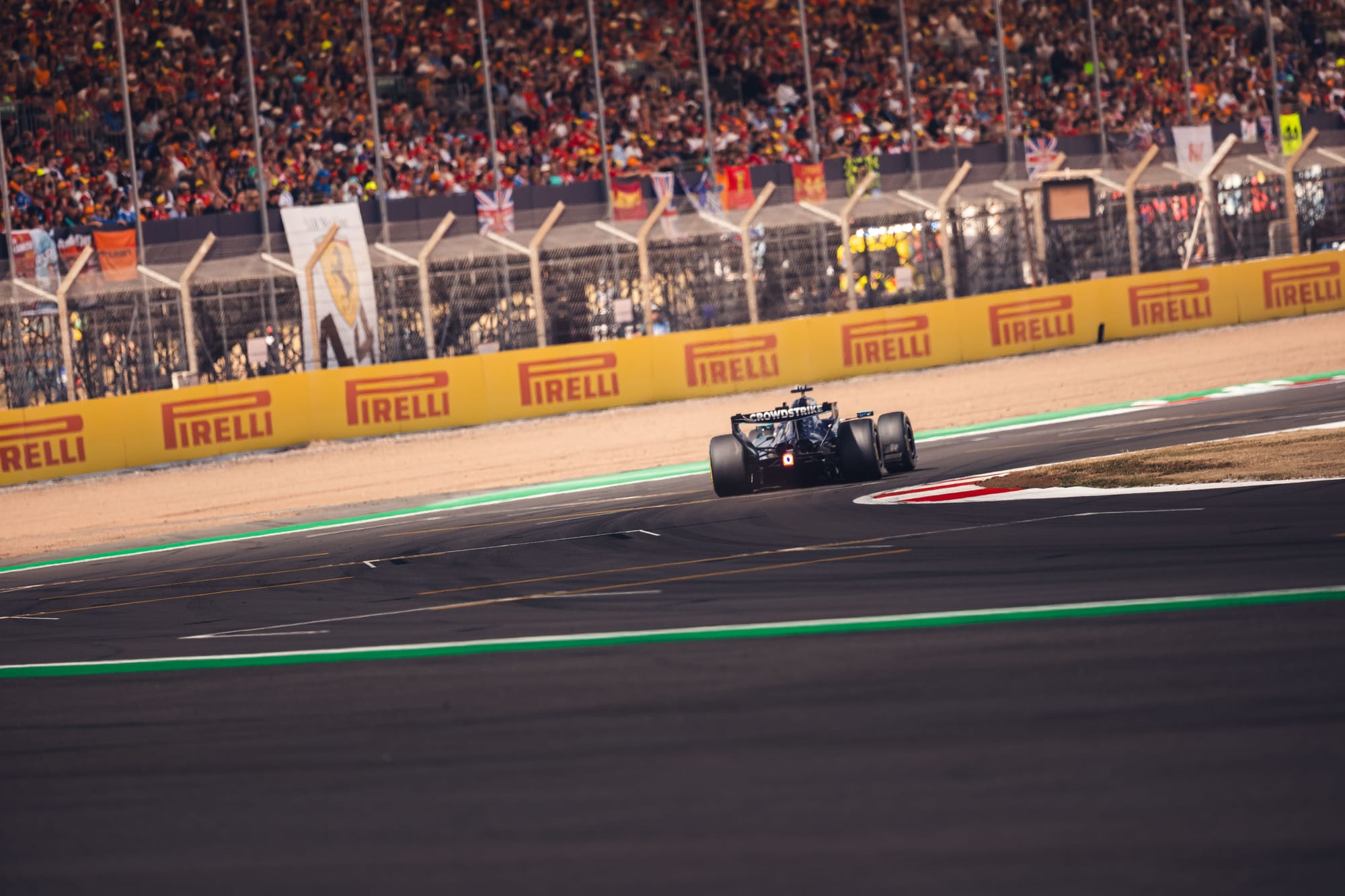
Executing the lift-off qualifying trick perfectly is not the work of the moment as it requires plenty of practice from the drivers and an execution that leaves little room for error.
This is why Russell and Antonelli spent a decent amount of time in the simulator before the British GP practicing the technique to be sure that they could do it.
Key to nailing it is in lifting off the throttle before the battery hits 0% - because if it gets there and the MGU-K cuts off in an instant because there is no energy left, then that will be in breach of the ramp down rules.
Getting it right therefore requires intimate knowledge from the drivers about the state of their battery in its final few percent, which can fluctuate lap to lap.
So it is not a case of finding a set spot on the track, like a distance marker or sponsor board, to come off the accelerator to comply with the rules.
Instead, where drivers lift off depends entirely on what the battery energy level is.
The Race understands that Mercedes created a system whereby the drivers were given a tone in their ears when the battery got to a designated level above 0% where they had to lift off.
Having been comfortable with the process in the sim, and happy with it throughout practice, Russell and Antonelli committed to it throughout sprint and normal qualifying at Silverstone.
With rivals now aware of what is in play, and the trick potentially powerful at some tracks coming up such as the Hungaroring, it is obvious that others will explore adopting it themselves.
Key to making it work though is in making sure drivers lift off at the right moment, which can be achieved through audible messages or a visual notification on the dashboard about battery life remaining.
But anyone who uses it will be well aware that while the laptime benefit is clear, so too is the downside of getting it wrong.
Lift off too late and hit 0% battery, then that means a breach of the technical rules - so likely exclusion from qualifying and starting from the back of the grid.
It is the perfect example of a no risk, no reward tactic.
from The Race https://ift.tt/Uyku68q


No comments: