
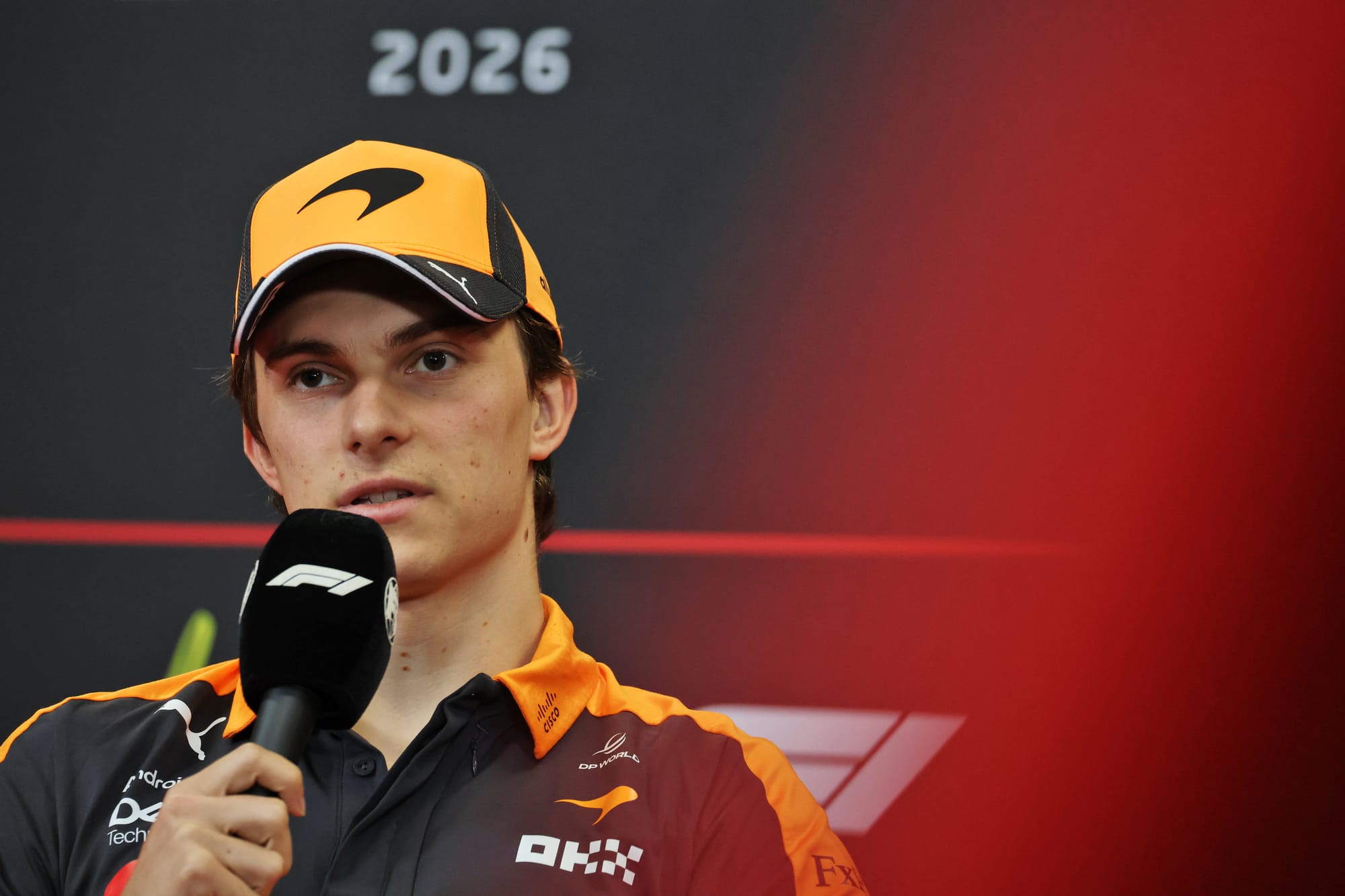
The key theme among drivers in the build-up to Formula 1’s Hungarian Grand Prix so far has been concerns about how much results in 2026 are out of their hands.
Last weekend’s Belgian Grand Prix exposed how forward-thinking algorithms that dictate where and when energy should be deployed are causing frustration among the majority of drivers.
It led to baffling straightline speed deficits between identical cars and drivers feeling like what the algorithm decided was a key factor in deciding qualifying and the race.
Oscar Piastri complained at Spa that when qualifying is being “decided by computers behaving or misbehaving, it's a pretty crap way of going racing.”
Asked in Hungary if it “sometimes feels like you’re the passenger of an AI programme that still has to be trained?”, Piastri replied: “Sometimes, yes. At a track like Spa or a track like Silverstone, it’s going to be worse.
“Here [at the Hungaroring], I really don’t expect there to be many problems at all with that kind of thing, because the straights are so much shorter, so even if there are differences, they should be a lot less.
“But the principle of driving a race car that loses effectively half of its power before the end of the straight is hard to get your head around sometimes.
“Even in Spa, a lot of the middle sector we were doing it just on the combustion engine, with no battery assistance at all, which is a weird feeling in itself, having some corners with a certain amount of power and others with full power.
“Spa was particularly frustrating, not just for me but for quite a lot of others, because those small differences in the code and what the engines did made quite a big difference in laptime.
“Especially at the front of the field, I think there were still only nine hundredths or something separating four positions [0.094s covered third to sixth], and there were definitely more than nine hundredths on the table for quite a few drivers from things they could not control.”
These forward-thinking algorithms have existed for a long-time before 2026, but as Piastri highlighted, knowledge of the previous power units was so mature, the impact was minimal.
“When I joined Formula 1 [in 2023], those engines were incredibly mature, but also the penalty of things being slightly wrong or slightly out of place was significantly less, because it was such a small percentage of the overall power you got,” Piastri said.
“Whereas this year, it’s basically half your power, so any small differences or anything that doesn’t quite go right has a massive impact, especially at a track like Spa.
“We’ve got no control over where the deployment happens, more or less. You can push the boost button, but that’s more for overtaking than in qualifying, especially.
“When you’ve got those differences there that you have no control over, it can be frustrating.”
‘Less raw’ a challenge
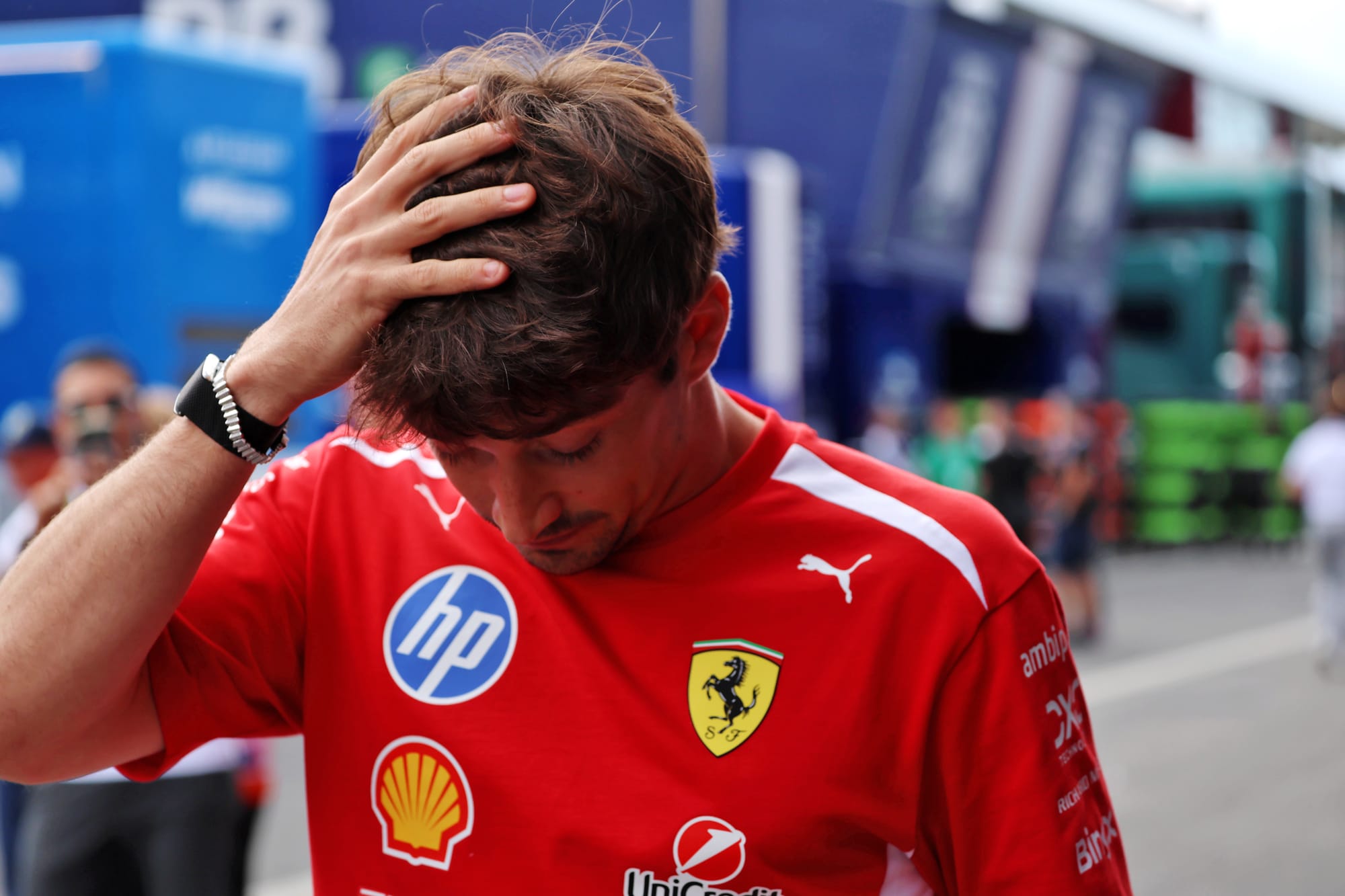
Charles Leclerc has long bemoaned the reduced challenge of qualifying in 2026 and how you can actually be punished for the kind of all-out qualifying laps he’s become renowned for. He gave the example of doing a “very good” La Source Turn 1 at Spa, only to be punished for it as he then consequently lacks power on the Kemmel Straight.
He explained "I feel like we all get surprised here and there on different tracks, because it's never always always the same reason why a problem has occurred, which makes it quite complicated.”
As Max Verstappen summed up: “Sometimes you cannot make a difference. You're not allowed to make a difference because it will just penalise you on the next straight.”
Asked if fast drivers were still being rewarded, Leclerc said: “The characteristics of a fast driver is to adapt, constantly and quickly.
“To be a fast driver only on one car- I mean, it is not great, and I don't think it exists so much either. I think a fast driver is fast in any car.
“Does it add a little bit more unpredictability with these cars? Yes, it does, and I think pushing the absolute limit is probably less rewarding than it was in the past because whenever you go over, whenever you have a wheelspin, you waste energy on a wheelspin because you're not going forward but you're using the battery.
“So all these kinds of things are making it a bit- it's less raw and it's a little bit more of a thinking game and of restraining yourself from going to the absolute limit, which is not my favourite exercise but again it's the way it is and I've got to optimise whatever I have.”
‘Too complicated’ - but will it change?
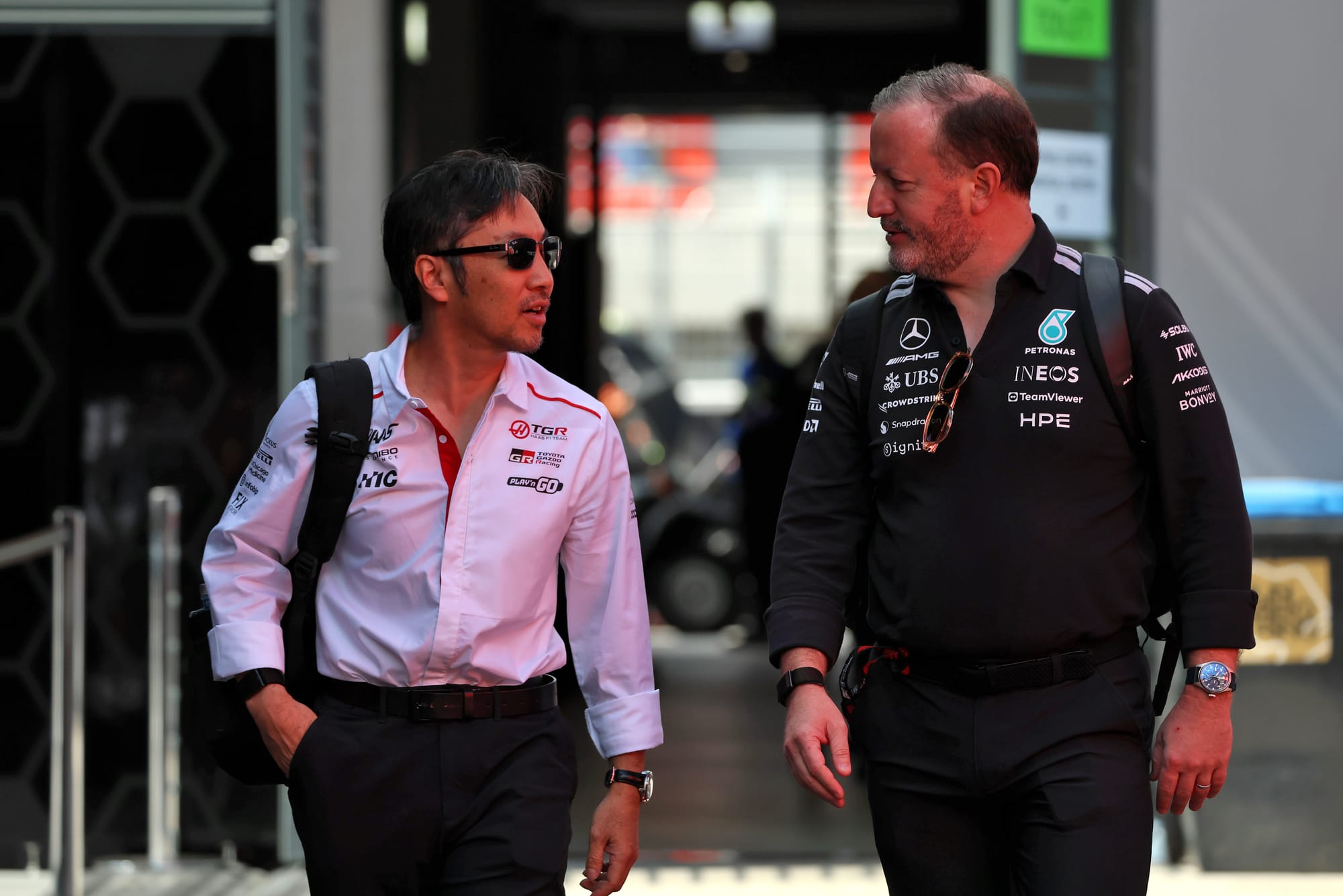
It’s not just drivers calling for change either as Haas team boss Ayao Komatsu thinks F1’s formula is “just too complicated” currently as “it relies on a tiny detail of driver operation that has an unintended or secondary consequence.
“I think we all identify the need to avoid [it] and improve as a sport to bring the control back to the driver and also just simplify for everyone.
“It's very important that everyone understands the sport regardless of what your interests are. To be able to do that, I think the sport has to be a bit more simplified.”
But whether it will change before F1’s likely switch to simpler V8 engines remains to be seen.
There are 2027 and 2028 rule changes planned that will shift F1 from its current 53-47 internal combustion engine to electrical power split to 60-40 in favour of the internal combustion engine.
But that won’t eliminate the predictive algorithms, just reduce their importance as the electrical deployment is lessened.
Piastri does think that teams’ growing understanding of how to exploit these power units will help too.
“I’m sure it’ll get better. I don’t expect it to ever fully go away, but as the manufacturers understand it more and work out the regulation restrictions more, in terms of what the code can and can’t do, hopefully things will become a bit better,” Piastri said.
That will lead to fewer mistakes with the algorithms but won’t necessarily mean more power back in the driver’s hands.
A counter view
Not everyone is aligned that things need to be simplified in the first place, however.
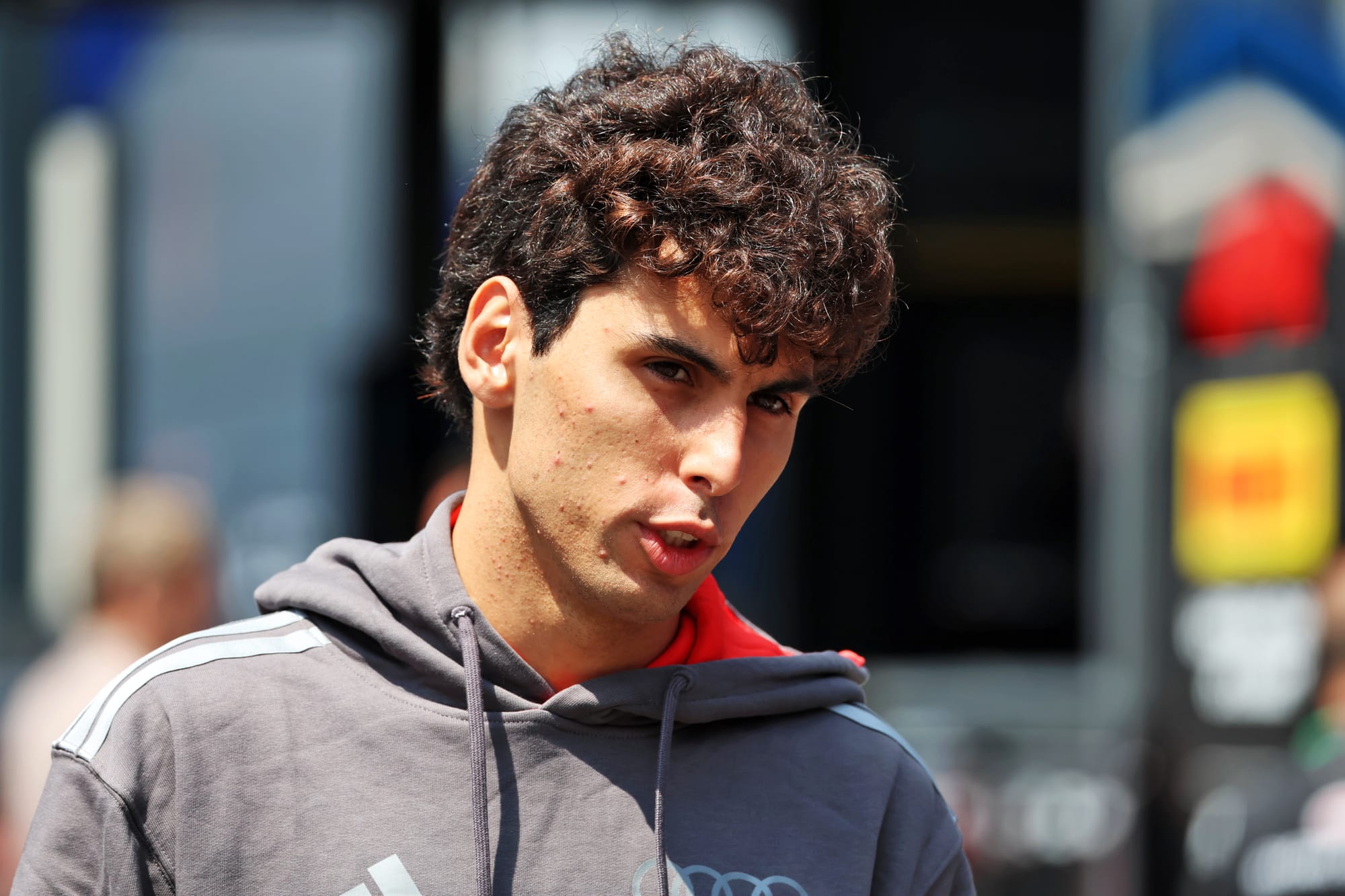
When asked about the predictive algorithms, Audi F1 driver Gabriel Bortoleto said: “We are in Formula 1. We are developing the future technology.
“If we are not using all the tools that are available in the world for us, in our favour, then I don't know what Formula 1 is about.
“People used to complain because ‘nowadays the drivers have too much things to do’, now that there is things doing it for us, we are complaining now that they are doing it for us - so I'm happy with the way it's going.
“It's nice that the software is able to adapt itself and understand what and how much energy you are deploying through the lap and how to evolve through the laps, next laps you are doing. I don't think it should change, if I'm very honest, that's my opinion.”
He thinks adapting to such a challenge is just part of being an F1 driver.
“I don't think I changed much my way of driving, but again I don't like the sentence 'driving style', because I don't believe that a F1 driver should ever say that, because we should be able to adapt, even if it's not natural maybe.
“But we should be able to adapt to any type of car and the way you need to drive, that's why we do what we do and that's why we are the 22 drivers in the world doing F1.”
On the subject of whether the fastest drivers are still able to stand out, Bortoleto said: “Well, do you see Verstappen being slow? Do you see a seven-time world champion being slow this year? Do you see Leclerc being slow? I don't see them being slow, I still see them very competitive, so I wouldn't say fast drivers are slow.
“Actually Lewis [Hamilton] is a bit better than he was doing last year, Max is still performing like crazy, putting that car on the top, Lando [Norris], the world champion, the reigning world champion, is still quick when his thing doesn't break...
“I don't think we have seen slow drivers last year becoming quick and the quick guys slow, I think it's still racing.”
When Bortoleto’s comments were put to Max Verstappen, having clarified who said it, the Red Bull driver said: “Yeah, he's right. I mean, your driving style always needs to change to whatever is fastest.
“I can drive the cars just saying, ‘this is how I drive it’. Well, I can tell you in Spa, you lose half a second. That shows you how weird it is at the moment.“He’s right, you need to adapt. Adaptability is super important. But that goes for any, like all the series that you've raced in, all the way to F1, I think you always need to adapt to what is best for that car that you are driving.”
And when The Race put the question of whether F1 needs to move to put more power back in F1 drivers’ hands, Fernando Alonso - who may well feel there’s already plenty out of his control in F1 2026 so far in the slowest car - said: “I don’t know. It depends. I think F1 has always been a little bit like that.
“I don’t think the drivers were deciding everything, even when we had traction control and some of the other aids. It was very specific to each team, developed by each team in a different way, with different philosophies.
“You were pressing the throttle at the exit of the corners, and some cars were much better than the others. It’s not pure driver talent or input on some of the exits.
“It’s the same with the starts. I’ve been doing starts for 25 years, and we’ve had many different regulations. At the end of the day, there were always some cars and some teams starting better than the others, with both cars. It’s not just that someone was doing something differently with the clutch, with a technique or with the throttle application. Both cars from that team were extremely good or extremely bad.
“I think the team is always bringing the performance to everything. But yes, I think with these current regulations and the battery deployment, there is something that has to be fixed and improved. I think that’s well understood.
“We are in the first half of this set of regulations, in the first year, and there are already talks about 2030 or 2031 and the V8.
“Next year, there is already approval for the change to the combustion versus electrical part of the engine. There are things moving forward, and it’s well understood by the sport, by the teams and by everyone.
“I’m optimistic for the future that it will get better and that it will be better understood what the rules and what the cars need to be.”
from The Race https://ift.tt/aN7bcA3


No comments: