
The 2026 Formula 1 season will look a little different to what we'd started to get used to in Miami this weekend, as the championship returns from an unintended April break with a lot of changes.
Alterations to the controversial engine rules and a raft of major car upgrades could have a significant impact on the pecking order.
The cancellation of the Bahrain and Saudi Arabian races meant the teams spent a month improving their designs and getting their heads around new regulations.
Miami being a sprint weekend further complicates the task of figuring everything out on-track for real, so the start of F1 2026 2.0 has all the ingredients to trip people up.
Big visual differences
Most of the attention in this gap has been on rule changes, but the cars themselves will probably look very different too, as upgrades across the grid are expected to be pretty dramatic.
Once it became clear around the time of the Australian Grand Prix season opener in March that there was a high chance the Bahrain and Saudi Arabian races would not take place, teams quickly reshuffled their development plans to hold fire on rushing through any new parts.
It meant delaying incremental changes and instead focusing everything on the opportunity to unleash big packages for Miami.
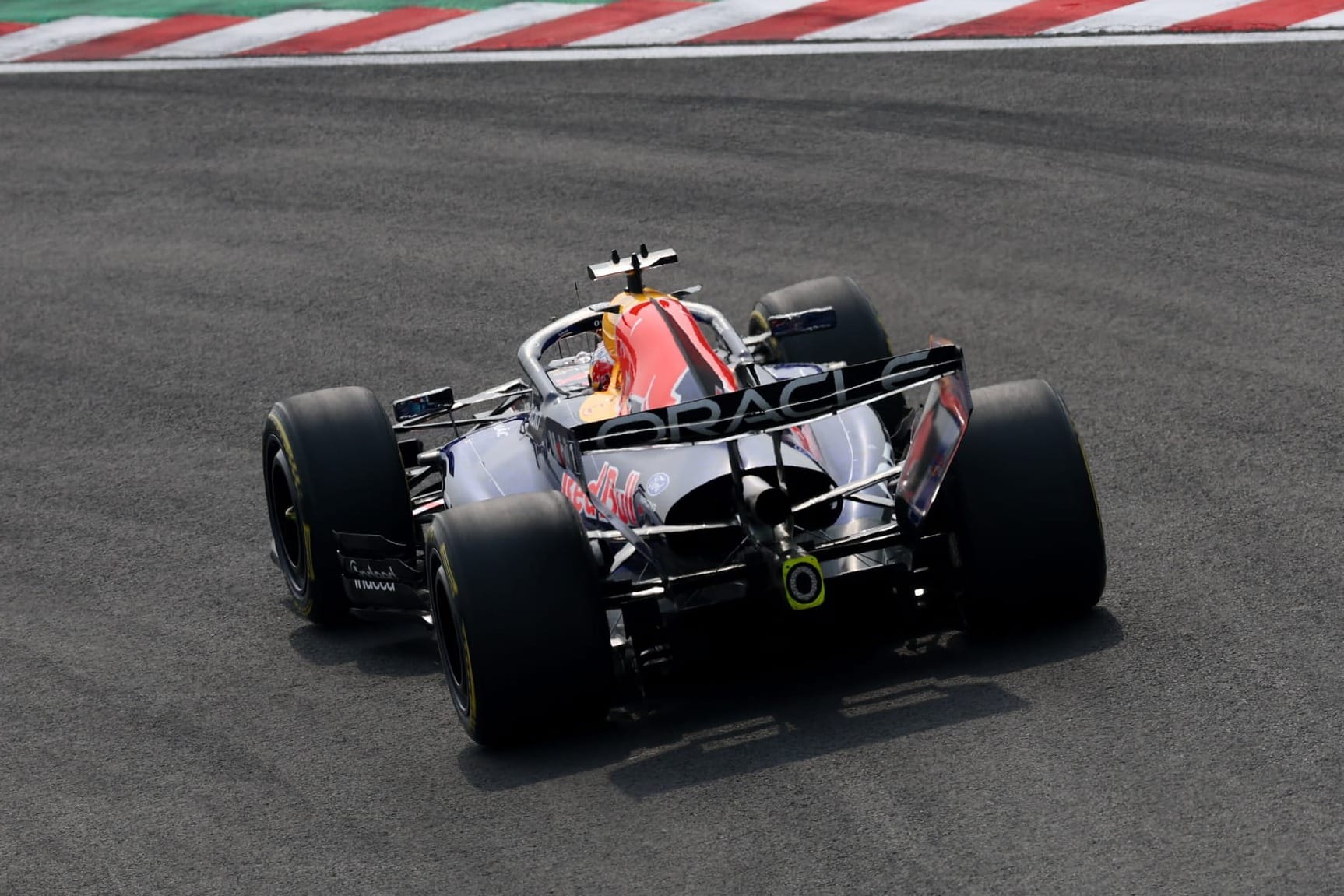
Some teams look set to be bold and introduce a full-spec revamp this weekend, with Ferrari and Red Bull both having been spotted running with heavily revised cars during filming days.
The spy shots that have emerged from those tests hint at some interesting developments, with Red Bull appearing to have adopted the 'Macarena' upside-down rear wing that Ferrari has trialled (and that it aims to bring back), as well as revised front wing diveplanes and new sidepods.
Not everyone is introducing everything at once though. McLaren and Racing Bulls are two teams that have talked of a stepped upgrade package.
Racing Bulls originally had a Bahrain and Canada upgrade scheduled. But being unable to bring forward the Montreal spec, it has elected to keep those new bits back for Canada in late-May, which means rolling out what was originally set for Bahrain in Miami.
McLaren too is set to bring a two-stage upgrade. From the start of the year it planned major developments for the Miami/Montreal events and it has stuck to its plan.
But the scale of the aerodynamic tweaks will be big. Team principal Andrea Stella said across the next two races this would amount to "an entirely new MCL40" and McLaren has specified pre-event that its upgrades extent to "the front and rear brake ducts, bodywork, floor and rear wing".
'Massive' rules impact
Even though the fundamental architecture of these engines remains the same, the way they will be used is going to be significantly different enough that the competitive order will be influenced.
From Miami onwards there will be a lower recharge limit in qualifying to minimise the most extreme battery recharging techniques.
Other adjustments across the regulations include an impact on how the battery can be charged, and how much of the engine's electrical power can be used during different parts of the lap.
And as Ferrari team principal Fred Vasseur warned ahead of the energy management rule tweaks, "each time that you make a small change, it will go in the direction of someone or against someone" and that can, as a result, "impact massively the results".
That might be stretching the point slightly, as the real impact might only be to the tune of a few hundredths of a second, but Vasseur is right that the changes will inevitably suit some teams or manufacturers better than others.
Everybody's engines are designed a certain way: the turbo sizes were chosen for a reason, the battery design, everything. There's just no way that the rules can change and the impact be completely neutral across the board.
It's not going to suddenly drop Mercedes from a clear top spot to being nowhere near the podium, but the leading team will probably bear some scars from this.
Even though the theoretical potential within the regulations is the same for everybody, Mercedes has done a better job of maximising that so far.
One of the things Mercedes was doing better than everyone else was extracting that last extra bit from the battery in terms of charging and deployment, so logic dictates that a small reduction in the peak amount available will help other teams by bringing Mercedes closer to them.
George Russell did not think there will suddenly be "drastic changes" but said he expects the field to "slowly bunch up" and for Mercedes' rivals to be "hot on our heels".
Flat-out qualifying again?
The headline act of the rule changes is trying to make qualifying more flat-out again.
That should be exactly what happens in Miami. In fact, there's a very good chance this will be the most normal the 2026 cars have looked all season.
It should be a more conventional qualifying experience for the drivers and the fans. Miami was already likely to be more in the mold of China than Australia or Japan, and it could be even better because this is an energy-rich track.
There are, for example, plenty of opportunities to charge and fewer areas where deploying MGU-K power significantly offers a big benefit.
The rule changes will simply reduce the extremities a little further too: the most aggressive energy management tactics, the charging strategies and so on will all be reduced.
There will be a little less energy to deploy overall, and different restrictions on how much electric power can be used in certain phases. The strange and offset loss of deployment on straights caused by a driver being unexpectedly below 98% throttle exiting a corner - something which caught out Charles Leclerc and Esteban Ocon in China - should also be gone.
There will be an overall negative impact here in terms of raw laptime, but that should be more than worth it to see a general eradication of the extreme behaviours and unpopular elements that drivers and fans have broadly disliked about F1 2026 up until now.
Refined racing
Discovering how much impact these rules have in the race, as well as qualifying, is one of the big curiosities heading into the Miami GP.
The way boost can be deployed, and the desire to manage speed differentials and closing speeds in the grand prix, inevitably means the racing itself will look different too. The question is: how different?
We don't anticipate a huge amount of overtaking, as Miami is a tough track for that anyway. But it might be a refined version of what we've seen so far.
The so-called yo-yo racing from the first three rounds was extreme in Australia, and sporadically powerful in Japan but also restrictive at the same time.
In China, the track layout facilitated a better balance. There was racing mid-corner, and actual changes of position that lasted rather than just drivers going back and forth depending on battery state. It was still engine-led, but it was more meaningful because it led to racing not just overtaking.
This could be repeated in Miami, only even more strategic. The only real opportunities to deploy significant energy will be the long run through the middle sector down to the tight Turn 11, and the long back straight into the hairpin.
There's also a long enough run to the start-finish line and first corner that means drivers won't be able to deploy everywhere; they'll have to pick and choose.
While there will probably be a degree of conformity in deployment tactics over a single lap, that won't remove the trade-offs needed for the race.
Drivers might be tempted to burn their energy in one place, knowing it leaves them vulnerable elsewhere, and seeing how that plays out could be genuinely interesting.
If it harnesses the best of what racing can be in an energy-limited formula, it could deliver something more strategic and meaningful than the slightly inauthentic, prolific-but-shallow overtaking we've mostly seen so far.
Unlocked potential
It isn't just upgrades that teams have been working on, as the gap since the last race has also given everyone a chance to better understand the cars they were using for races one to three.
With the Middle East races called off, the cars were instead shipped back to teams' bases - allowing some detailed inspections of the chassis and the opportunity to conduct work that wouldn't have been so easy to do while on the road.
Across the board this has included more reliability tests, component checking and restoring of stocks.
For Honda - the focus of so much attention at the first three rounds of 2026 - the gap also afforded it the chance to inspect one of Aston Martin's cars at its headquarters after the Japanese GP as it attempts to diagnose the cause of its biggest problems and remedy them.
"We took the opportunity to keep one of the AMR26 cars on site for further static testing in Sakura for the first time, focusing our efforts on reducing the vibrations and thus increasing reliability," said trackside general manager and chief engineer Shintaro Orihara.
He said Honda had made "some progress" and that further countermeasures would be implemented in Miami, though he cautioned that "realistically, this progress will not have a visible impact on the power unit performance on track, so we shouldn't be expecting big jumps forward here".
Racing Bulls also built a full car up, to have the real thing in front of a design office as they so rarely have the chance to see it in one piece. Team principal Alan Permane called it an opportunity to do "some unplanned work on the chassis".
At Haas, the unexpected chance to get the cars back at the factory with no rush to get to the next races has allowed some deeper work exploring gearbox stiffness testing and a more detailed look at the new front wing the team introduced in Japan.
Frenetic, longer FP1
For once, FP1 might be appointment viewing for F1 fans - even though it's set to be longer than normal.
Friday practice will be extended to 90 minutes - its old running time, dropped after 2020 - as a result of the rule changes and the time teams have spent away, precisely because this is a sprint weekend.
It's already a condensed schedule with just the one session before sprint qualifying on Friday, then the sprint race and grand prix qualifying on Saturday.
Those sessions come at teams fast even on a normal sprint weekend but, with new rules and new cars to understand, Miami is going to be on another level. Only so much can be prepared and simulated in advance.
As a result, "you'll probably see teams doing slightly different things in FP1 than they would normally do", according to Haas head of car engineering, Hoagy Nidd.
If there were not already plenty of banana skins lying around for teams and drivers to slip on, getting everything right in this single practice session will be close to impossible.
This could well turn out to be the hardest Friday all season long, with more unknowns than on any day - maybe even including at the season opener.
At least there in Australia teams went into Friday off the back of two weeks of testing in Bahrain and with a relative level of familiarity with their own packages.
Now there are more unknowns again, with a reshuffle of the rules on top, another circuit to get used to, and an awful lot of figuring out to do on the fly.
As this is a sprint weekend, and the first race back after a few weeks where a bit of rust can set in, whoever does the best job of learning in the moment as well as preparing in advance will have an advantage.
This might be the beginning of a new pecking order, or simply a slightly jumbled one-off. Either way, it should be a lot of fun finding out.
from The Race https://ift.tt/XOl9Ay6


No comments: