
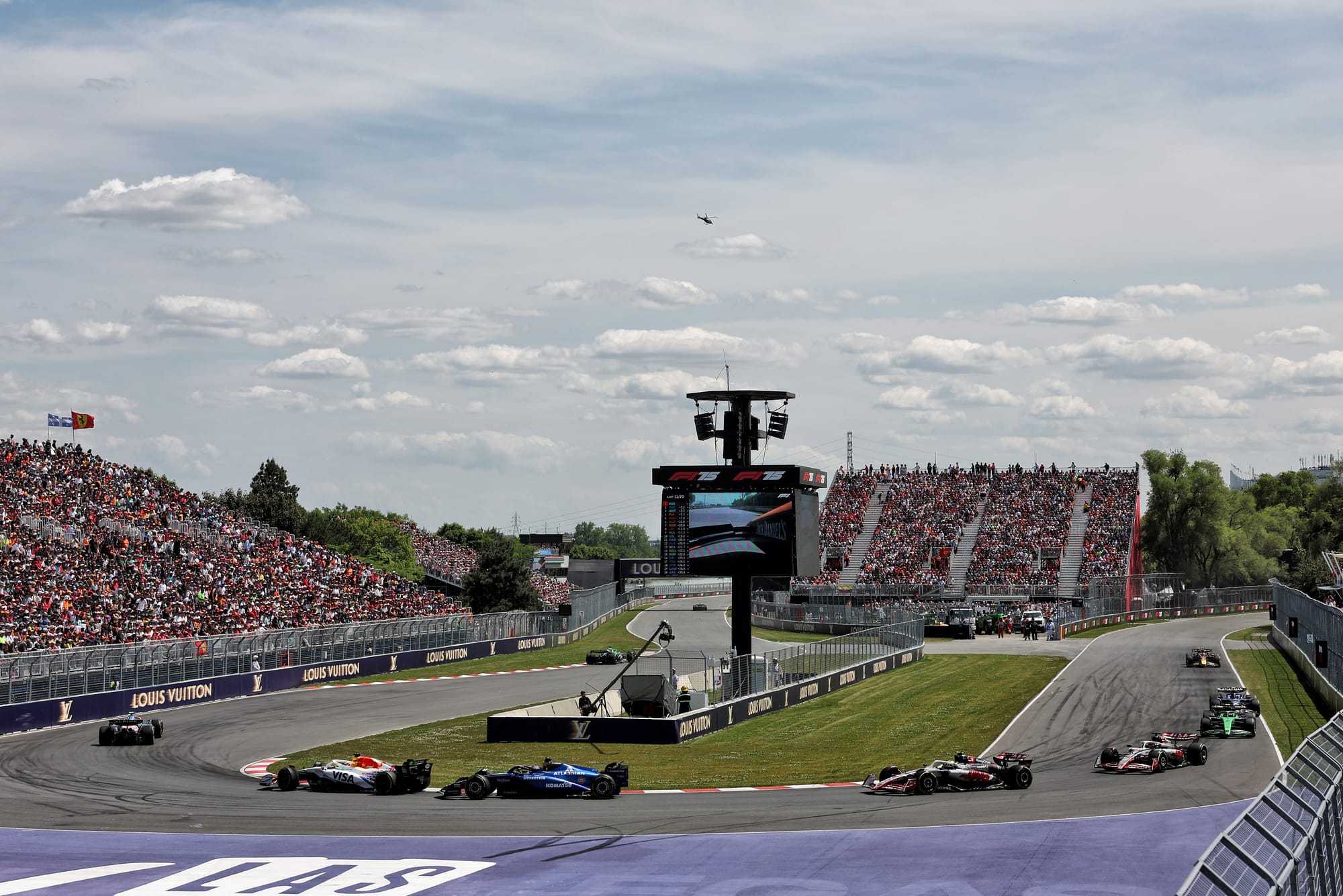
The 2026 Formula 1 regulations will face their sternest test yet at this weekend's Canadian Grand Prix, the most energy-starved circuit so far on this year's calendar.
The 6MJ per lap recharge limit in qualifying that is in play at Montreal's Circuit Gilles Villeneuve is the lowest that F1 has experienced yet with the new regulations.
Having originally been intended to have an 8MJ limit, Canada is one of the venues that has been adjusted dramatically downwards as a result of F1's push to try to reduce how much energy saving is required in qualifying and allow drivers to push more.
There have been some challenging venues already this season, with Albert Park being set at 7MJ and Suzuka cut back to 8MJ, but the level that is in play for this weekend is a first.
The cap on harvesting is directly linked to how hard it is to recover energy around each track, with the FIA reducing the limit at venues where it needs to deter drivers from employing extreme tactics to boost their batteries.
The limit not only shines a light on how much of a headache it will be in terms of energy recovery, but it also provides an extra challenge in terms of the risks that come with hitting the cap.
If drivers get to the ceiling too early in the lap then they cannot harvest any more energy until they cross the line - and that can leave them exposed to emptying their battery and being unable to replenish it until they get there.
Lower limits
Montreal falls into the group that is at the second-lowest level of recharge limits, alongside the Red Bull Ring and Las Vegas.
Only Monza, the home of the Italian GP, is below it because of its unique layout that has very long straights and only a few corners where energy can be recovered.
The current qualifying recharge limit list that teams have been advised of is as below, but these can be subject to change with the FIA having until four weeks prior to each event to commit. Jeddah would have been 5.5MJ had the race gone ahead as scheduled in April.
Recharge limit per lap (qualifying)
5MJ: Italy
6MJ: Canada; Austria; Las Vegas
6.5MJ: Brazil
7MJ: Barcelona; Abu Dhabi
7.5MJ: Britain; Netherlands
8MJ: Miami; Belgium; Spain; US; Qatar
8.5MJ: Azerbaijan; Mexico
9MJ: Monaco; Hungary; Singapore
These levels are what is in play for qualifying, with the allowance for other sessions (including the race) in Canada being 8MJ - and an 8.5MJ limit when overtake mode is active.
The asymmetric problem
The challenge of Montreal is not just because of the overall low ceiling for recharge; there are some unique layout complications that must be factored in too.
One of the things that teams and drivers are going to have to get their heads around is the fact that the energy demands of the track are asymmetric.
The first half of the Circuit Gilles Villeneuve features a run of heavy braking areas and short straights that will allow easy recharges and not much requirement for excessive deployment.
However, the final straight sections of the circuit - namely down to the hairpin, the run off of it, the final chicane and the start/finish straight - call on the need for much more deployment and limited opportunities to recharge.
So drivers are going to have to be mindful of not over-charging early in the lap so they can harvest in the limited places it's possible to do so later on, and also not risk being left without enough energy for the long run out of the hairpin.
What also needs to be thrown into the mix too is how hard it is going to be for drivers to get their batteries and turbos into the sweet spot for the start of a qualifying lap.
Miami exposed the risks with the 2026 cars that can come when the end of the lap features a long straight and a single slow corner, where drivers have to follow some quirky throttle demands.
That makes it harder for drivers to juggle the requirement to have their turbo spooled up and their battery at 100%, and not hit the top of the battery pack so they are left without boost.
The Montreal layout is going to be just as bad.
Williams driver Alex Albon was among those caught out by the phenomenon in Miami. He said: "Montreal is exactly the same: it's a long straight into the last corner and then you go again.
"It was easier in China, Melbourne and Japan. When you have a long straight and one big braking zone and then go, because it's so easy to harvest, you need to almost be careful in the big braking zone."
The cold tyre issue
Juggling energy demands around the asymmetric layout is made even more tricky by what are expected to be some big tyre challenges this weekend.
The Circuit Gilles Villeneuve has always been quite a difficult track at which to get the tyres switched on for the start of the lap, with the long straights at the end of it only good for cooling them.
The short, smooth, low-energy layout is one of the hardest of the year to get tyre temperatures nailed at, especially across both axles.
A characteristic that drivers often suffer from is starting the lap with cold front tyres, which can affect confidence and grip for the opening sequence of turns.
This year, drivers may not be able to drive in a way to aggressively warm up their tyres in the final sector because of the energy limits.
Plus, things could be even harder this year because the race takes place a month earlier than usual so temperatures are lower.
Current forecasts point to a chilly weekend: overnight temperatures could drop as low as 5°C ahead of Friday's running and only recover to 15°C by the time sprint qualifying is under way.
Temperatures could be low enough that drivers may need extra preparation laps in qualifying - so extending each run.
While Pirelli's tyre compound choices this weekend are the softest they can be, they are a step harder than last year because the C6 is no longer part of the range.
Teams are mindful of the potential risks for graining, although this is a phenomenon that Pirelli thinks has been reduced with the new 2026 tyre designs.
from The Race https://ift.tt/Azw6hGT


No comments: