
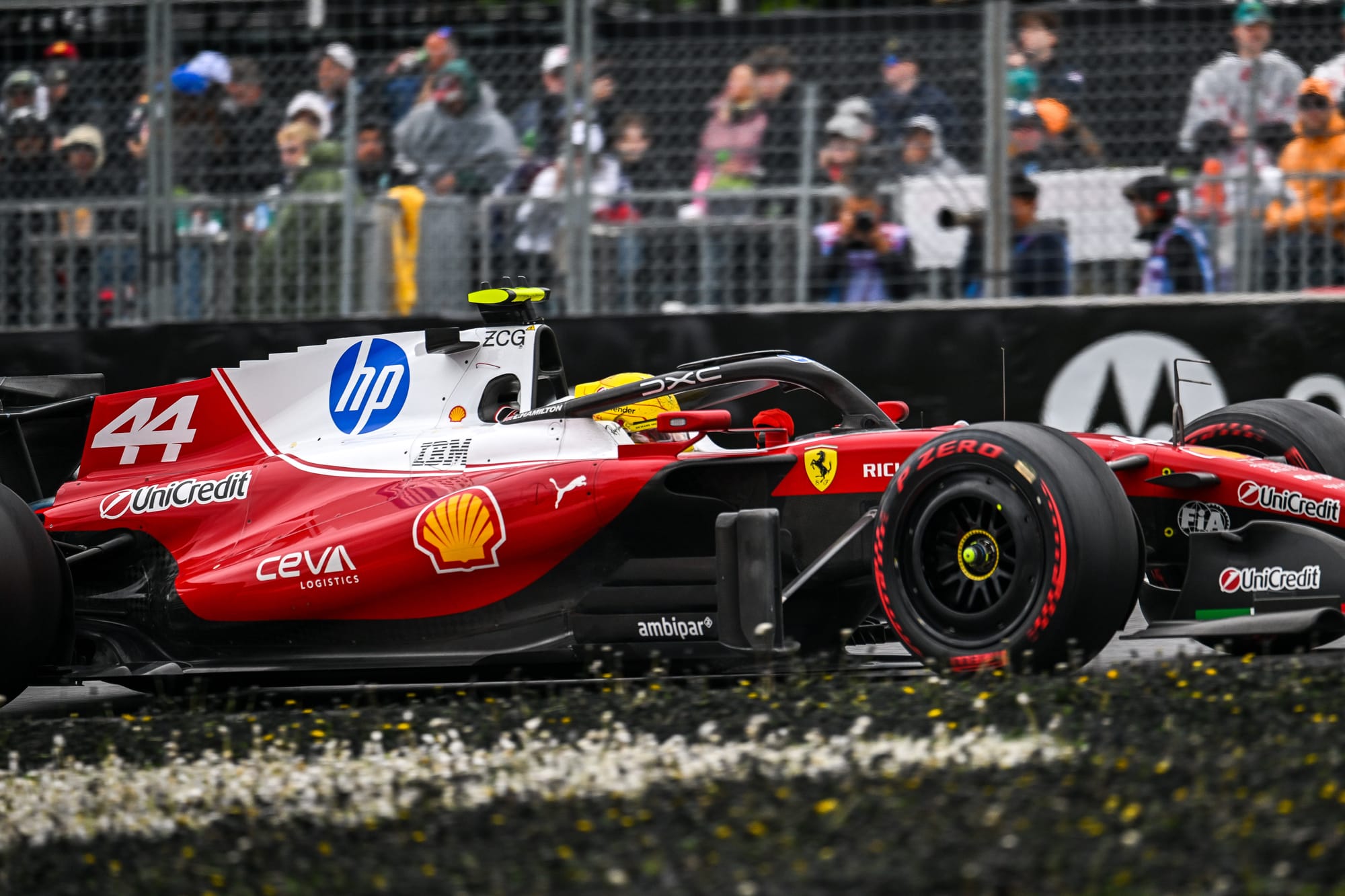
Take a look at the difference in tone between the two Ferrari drivers after Formula 1's Canadian Grand Prix.
Charles Leclerc: "It's been one of, if not the, worst weekend of my career. I have work to do to get to Lewis's level on a day like this. I will look into the data. I've gone through difficult races [before] where you analyse after and you learn a lot."
Lewis Hamilton: "The happiest day of my Ferrari days so far. I finally have the engineering team that I've been working towards. I think our car is great. I can understand it and am a lot more comfortable with it. While we're not exactly where we want to be, getting this result has capitalised on our great reliability. I feel very light right now, mentally in a good place."
Hamilton looked like his old self in the car, hustling it hard between the walls, rescuing the odd moment in practice as he keyed himself into the track, but totally at ease with exploiting the SF26's lovely low-speed handing, the way its attitude responds to the throttle and brakes.
The Ferrari has by far the best mid-corner adjustability of any car on the grid and Hamilton's bold way of attacking the corners - braking late but still finding the perfect sweet spot of rotation in how he comes off the left pedal into the turn without scrubbing away on the exit the speed he's gained on entry - was working beautifully.
He's able to drive this car in his natural way. And he's happy that his engineering team has developed a better understanding of what it is he needs.
In a ground effect car, that style was never going to get him to his previous level: too much aero balance migration towards the front into low- and medium-speed corners, then the exact opposite as the aero shifted quickly rearwards again in the next phase as the brakes were released; too much disruption to an aero platform that needed to stay level to give its best.
Late braking, big steering inputs really didn't allow him to squeeze the last couple of tenths out of the car on a consistent basis.
But we're no longer in the ground effect era. These cars have ride heights you can see, have more compliant suspension, and can more easily accept a workable downforce/balance combination. Hamilton's muscle memory, which has probably been working against him since 2022, is suddenly perfectly appropriate to the car. Not only is the SF26 not a ground effect car, but it's been developed with a greater understanding from the engineering team of what traits he needs in the car.
But let's be cautious about heralding his fine performance in Montreal as a permanent return to vintage Hamilton. For two reasons: Montreal, Shanghai and Singapore have historically been his three standout circuits. So we've just had two of his standout tracks in the last four races and he outperformed Leclerc at them both (just as he did in his lacklustre 2025 campaign). Secondly, using Leclerc having the self-described worst performance of his career as a barometer with which to judge Hamilton's absolute level is not very revealing. It was great to see Hamilton with all his old confidence between Montreal's walls, but let's get a broader sample set to see how representative it was.
Leclerc described his problems in Montreal as not being able to get the tyres anywhere near their performance window (typically between 85-110°C).
If you cannot reach that threshold with the front tyres - and it really is like a switch - you will be nowhere near the pace. Montreal’s gripless surface, slow, short corners and low track temperatures were the perfect mix to expose any difficulty with that.
Leclerc drives with an extreme tolerance for oversteer, is typically slightly earlier on braking than Hamilton, dynamically dances with the weight distribution of all four corners to get rotation, and relies less on big steering angle. He will often use some trailing throttle (though less so now that it costs battery energy) on corner entry to stabilise the rear, which can increase understeer but by locking the diff more gives great traction.
It's a busier style than Hamilton's and perhaps doesn't load up the front tyres as much. On a track where you are having to push the tyres to get them to their window, rather than holding back to prevent them overheating, that can create difficulties.
It will not be like that at Monaco, scene of virtuoso Leclerc performances for the last five years. If there was only one F1 race per year and it was Monaco, Leclerc would be without a shadow of a doubt F1's greatest driver. He really is very special there.
The Ferrari - with its dynamite slow-corner performance, adjustable balance and great small-turbo response, is perfectly configured for that track too, a place furthermore where its power deficit is less important than anywhere else.
So an all-Ferrari front row would not be a surprise. If Hamilton can get anywhere near Leclerc around there, we can say he's definitely back. But even if he can't, it doesn't mean he isn't.
Hamilton has made much of the fact that he doesn't believe the Ferrari simulator is accurately bringing out the issues he faces when he first arrives at a track and that it needs further development to incorporate what for him are some crucial details.
He discarded it in preparing for Shanghai and Montreal - and they've been his two best performances to date. But they almost certainly would have been anyway. He always excels at those venues. Whether he will gain more than he loses by not using the sim for subsequent tracks is an open question.
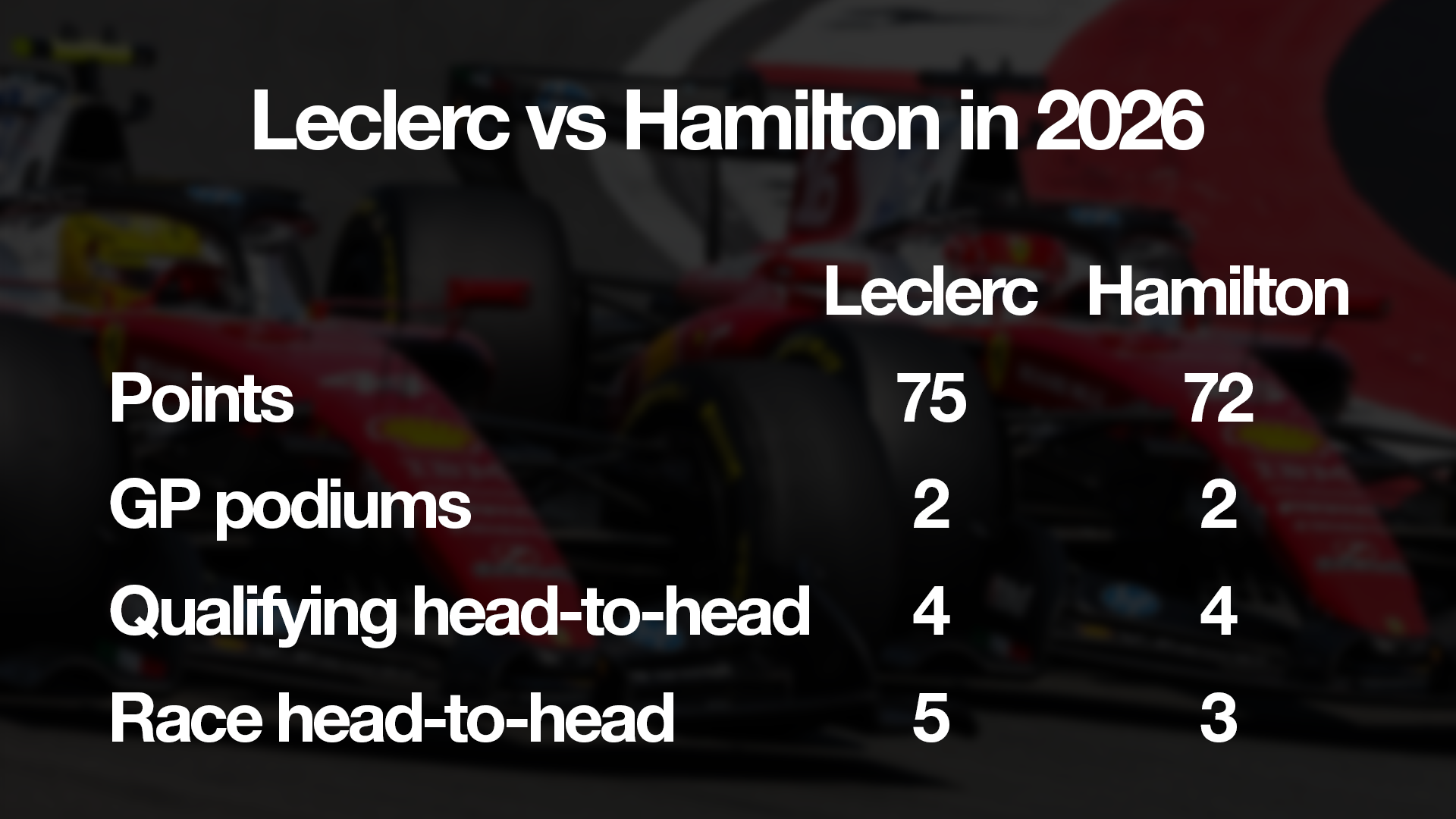
Has the 2026 generation of power units stymied Leclerc, the battery demands reducing the reward for his magical throttle usage? Quite possibly. Have the revised aero regulations helped Hamilton out of the dead end he was in with the ground effect cars? It looks like it, yes.
So their performances have converged compared to last year. But that was Hamilton's first year with a very different car to the Mercedes in an environment where Leclerc was long ensconced.
How are they really comparing this year? Take out Shanghai and Montreal as the specific tracks Leclerc dislikes and Hamilton likes, we are left with Melbourne, Suzuka and Miami. At those venues their performances were close - much closer than in 2025 - but it was definitely Leclerc who was Ferrari's cutting edge.
Only the next few races will give us a more definitive picture on the extent of Hamilton's return to form.
from The Race https://ift.tt/nHSqVR8


No comments: