
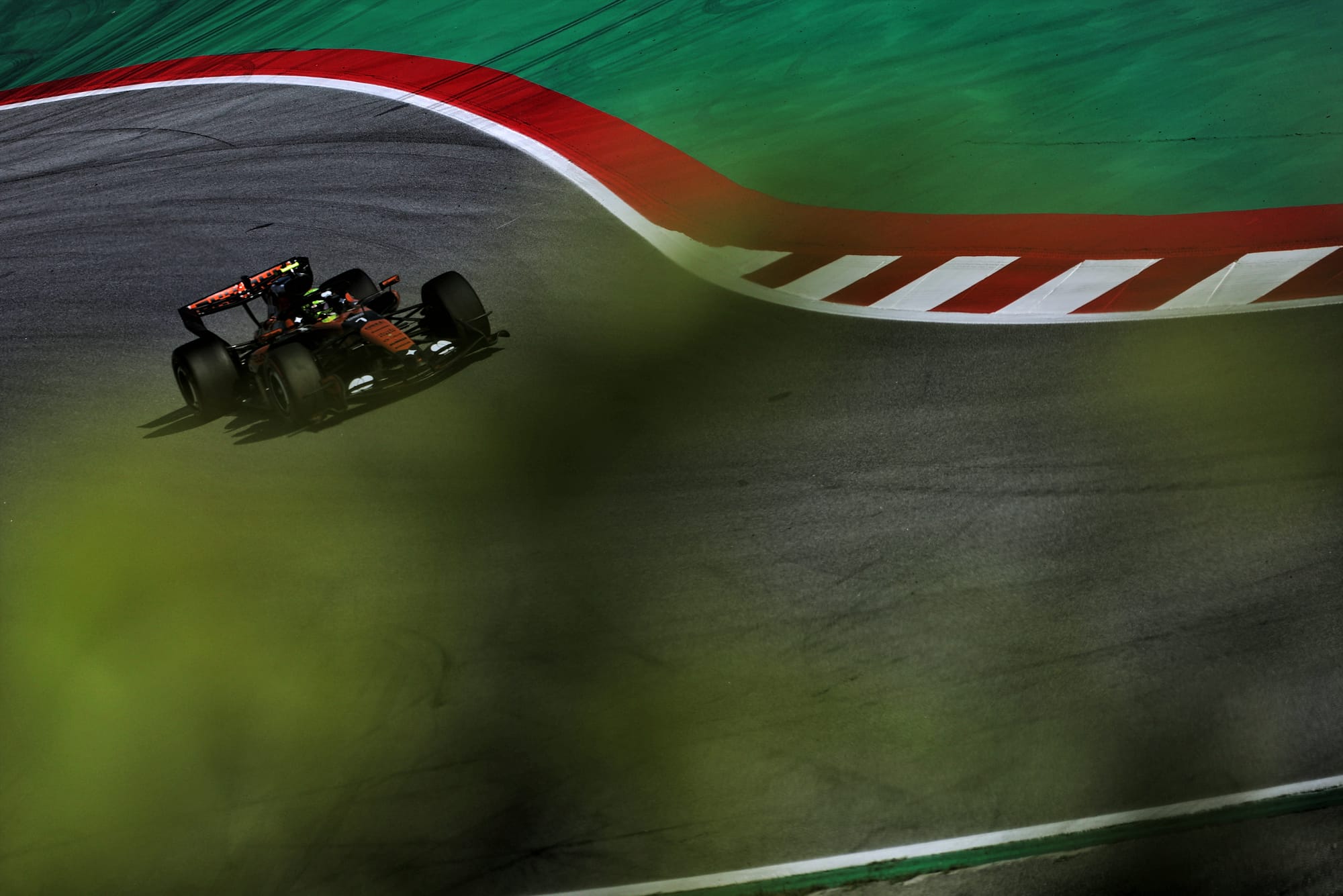
McLaren broke the curfew for the second consecutive race heading into qualifying day for the Barcelona Grand Prix for what it described as "precautionary work" on both of its Formula 1 cars overnight.
That came as a result of concerns about the installation arising from Lando Norris's Monaco GP weekend problems.
Each team is allowed four exemptions from the curfew, where they are permitted to work on the car during hours when otherwise operational personnel are not allowed in the paddock, without penalty. This allowed McLaren to "replace permissible key components to help improve the robustness of the installation and integration of the power unit on both cars".
This work was not a reaction to any problems that arose during Friday practice at Barcelona. McLaren had carried out "extensive work" to fix the problem that caused Lando Norris to stop on track during Friday practice in Monaco, which included replacing the wiring harness, changing the ESME (energy store main closure) pack and various other changes, but the cause wasn't immediately diagnosed. Norris later retired from the race in Monaco with a power unit problem.
Analysis conducted since then in collaboration with Mercedes-AMG High Performance Powertrains raised a potential installation problem that McLaren wanted to be absolutely sure was resolved to avoid any repeat of the failure. Therefore, the decision was made to strip the car down to work on the suspected root of the problem.
Although the team would not disclose the details, it is reasonable to conclude that the problem lies in the installation of the electrics and multiple systems were scrutinised. This is understood to have included ensuring that the electrical system that the onboard fire extinguisher system is controlled by did not have any problems.
McLaren did not have the time to complete the work prior to Friday practice given it was a precautionary measure, and while there may have been time to complete it on Saturday morning before free practice the pragmatic decision was made to break curfew to ensure it did not put McLaren on the back foot ahead of qualifying.
McLaren has had a multitude of technical problems this year, meaning it has failed to get a car to the finish in five out of 12 attempts in grands prix held so far - two of those were failures even to start the race in China.
The fact this precautionary work related to the installation side is another example of the disadvantages of being a customer team in the first year of new power unit regulations.
"Never before have we felt that being a customer team has put us on the back foot. And when I say this, and I want to be clear here to avoid any misunderstanding, it's not because you are a lower priority for HPP," said team principal Andrea Stella in Monaco.
"It's because you have less opportunities to integrate, to stay on the same timeline when it comes to addressing reliability problems or exploitation of the power unit from a performance point of view, combining the efforts when you use the facilities and you have some experiments on the chassis side that you can add to a long run of the power unit when you are a works team.
"There's many reasons why reliability associated to the power unit - or taking advantage of being a works team from a power unit point of view - these reliability issues have made it into 2026, where we had such a large technical regulation change."
McLaren has opted to take a proactive approach to solving this problem to eliminate any possibility of a repeat that could cost track time. While using up the second of its four curfew exemptions so early in the season is a risk, given breaches beyond that come with penalties, the negatives of yet another failure would outweigh that.
Alpine also broke the curfew for the second time, in its case to build up a new car around a spare chassis for Pierre Gasly. This is described as a "chassis from the its existing pool" rather than being a brand-new one.
Cadillac was the other team to break the curfew.
from The Race https://ift.tt/zRyQ15G


No comments: